Wine storage means holding a bottle at a controlled temperature and humidity, in the dark and free of vibration. Ideal wine storage conditions sit near 12 degrees, and a cellar, a wine cabinet and a plain wooden wine rack reach them very differently. The gap between them only shows years later, when the cork comes out.
What actually matters
- A steady temperature beats a cold one: to store wine properly, stability outranks the reading itself.
- Humidity from 60 to 80 percent protects the closure and prevents air reaching the wine.
- Wine racks organise bottles; wine cabinets and wine cellars control wine storage conditions.
What proper wine storage protects against
Four forces act on a wine bottle at rest, and they work slowly enough that nothing looks wrong until the wine is poured. Heat accelerates every chemical reaction inside the glass, flattening fruit into a stewed, dull profile. Dry air shrinks the cork until air seeps past it. Ultraviolet light breaks down the aromatic compounds that give a wine its lift, which is why fine wine has always been bottled in dark glass. Vibration keeps the sediment in suspension and disturbs the slow reactions that build texture. A bottle exposed to all four at once loses in one warm summer what it was meant to gain in a decade.
None of these damage a bottle overnight. That is the difficulty of wine storage: the feedback arrives too late to correct. A bottle kept above a radiator for one summer will still look perfect, and will still taste tired. The same logic applies to a faulty seal, which is a separate problem from heat and is worth learning to recognise in the way a corked or oxidised bottle announces itself.
Ideal wine storage conditions, number by number
The reference values used by professional wine cellars across France are narrow and well established. Temperature sits between 12 and 14 degrees Celsius, held constant. Humidity runs from 60 to 80 percent. Light is kept out entirely, and the storage unit is placed away from anything that hums or spins.
Constancy matters more than the reading itself. A cupboard that holds 16 degrees all year is better wine storage than one that travels from 10 to 22 degrees with the seasons, because every cycle pushes wine in and out of the bottle neck past the cork. Below roughly 8 degrees, ageing nearly stops, which is fine for bottles you intend to drink soon and wrong for anything meant to evolve. Serving is a different question altogether, with its own optimal window described in our guide to the temperature each style should reach in the glass.
Bottles sealed with natural cork are stored on their side so the wine stays in contact with the closure and the seal stays swollen. Screw caps and glass stoppers can stand upright without risk, since that type of closure does not dry out. Once a bottle is open, none of this applies any more and the clock runs in days, as set out in our note on how long an opened bottle really lasts by style.
How to store wine properly at home
Most homes have no cellar, and most collections do not need one. Wine storage at home is a process of elimination: find the coolest, darkest, quietest and most stable spot in the building, then improve it rather than fight it. A north-facing cupboard on the ground floor, an unheated spare room, the bottom of a fitted wardrobe on an internal wall, a stairwell recess. Each is a defensible answer.
Rule out the kitchen, whatever the layout promises. Ovens, dishwashers and fridges all pump heat and vibration into the same few cubic metres. Rule out a garage that bakes in July, a loft under an uninsulated roof, and any shelf near a window. If the only candidate is warmer than ideal, keep the bottles there anyway and simply drink them sooner: young whites, rosés and unoaked reds tolerate imperfect bottle storage far better than a structured Bordeaux or a village Burgundy designed to be kept. Long term ageing is the demanding case; short term storage forgives a great deal.
What a wine cellar is, and whether a passive one still works
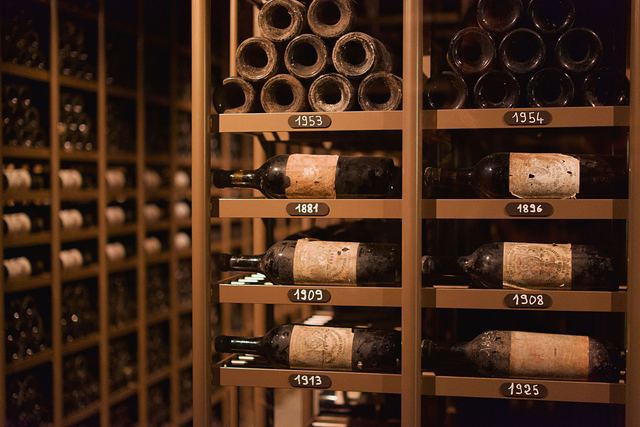
A wine cellar is an underground or semi-buried room whose mass keeps its temperature and humidity stable without machinery. Thick stone or earth walls, an earth or gravel floor, no direct sunlight and minimal through traffic: those features are the whole point. Passive wine cellar storage remains the reference against which every appliance is measured, because it is stable by construction rather than by thermostat. In the Loire Valley and across Champagne, the chalk and tuffeau caves that store wine today were dug for stone, not for bottles, and their location is what makes them work.
Two things commonly go wrong with an inherited cellar. It has been converted, insulated and heated, in which case it is now a warm room. Or it is genuinely cold and damp but shares a wall with a boiler room, which reintroduces both heat and noise. Check the reality with a recording thermometer over a full year before trusting it with anything valuable. For bottles bought to be resold rather than drunk, a dedicated bonded warehouse is the standard answer: secure access, insurance, a trusted chain of custody and delivery on request, all of which support a later sale. The reasoning is covered in our piece on buying wine as an asset rather than a pleasure.
Wine rack options, cabinets and coolers compared
The choice among wine storage solutions comes down to one question: do you need to organise bottles, or to create conditions for them? A wooden wine rack organises. A cabinet creates. Both are useful, and they solve different problems.
| Solution | What it controls | Best suited to | Budget level |
|---|---|---|---|
| Wooden or metal wine racks | Nothing; it holds bottles still and on their side | A room that is already cool and dark | Low |
| Single-zone wine coolers | Temperature, partly humidity | Bottles drunk within a year or two | Moderate |
| Ageing wine cabinets | Temperature and humidity, light, vibration, air renewal | A collection kept for years | Higher |
| Built or restored wine cellar | Everything, passively and silently | Large volumes and long horizons | Highest, and tied to the building |
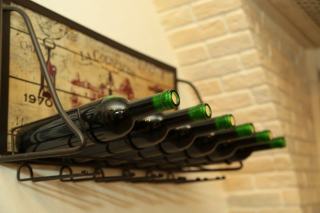
Wine rack designs mostly differ in material and capacity rather than performance. Wood is the traditional choice for good reason: natural pine and oak absorb ambient humidity gently, galvanised steel and wall mounted metal units suit tight spaces, and modular systems let bottle capacity grow one row at a time. Among the types of wine racks on the market, the deciding factor is whether the rack cradles the bottle body rather than pinching the neck, which is what keeps a stack secure when you pull a bottle from the middle.
Wine cabinets are rated by bottle capacity, and the honest advice is to buy roughly twice what you own today. The price range for wine storage equipment is driven by capacity, by the presence of separate temperature zones, by insulation quality, by noise level and by whether the unit is free standing or integrated into cabinetry. A quiet, well insulated unit costs more and pays that back in electricity and in stability. Compressor technology, shelf depth and the fit of the door seal separate a serious cabinet from a decorative one, whatever the online product page promises.
How to maintain wine storage conditions once they are set
Good wine storage techniques are mostly about measurement and restraint. Put a cheap hygrometer and thermometer inside the space and read them monthly rather than trusting the appliance display, which reports the air near the sensor and not the far corner. If a controlled cabinet drifts, check the door seal and the airflow gap behind it before suspecting the compressor. Keep the unit away from a wall exposed to afternoon sun, and ensure the space around it stays free for air to circulate.
Keep the space free of paint, solvents, cheese and anything strongly aromatic, because cork breathes slowly and will carry odours into the wine. Move bottles as little as possible, and label the rack rather than turning bottles to read them. If the room is naturally dry, an open dish of water raises humidity enough to protect corks in a small space. The good news, for anyone starting out, is that stability is cheap: a stable cupboard costs nothing and already delivers most of the benefit of an expensive unit.
Common questions about storing wine
Can wine be stored in a normal fridge?
Only briefly. A domestic fridge runs near 4 degrees, far below any ideal wine storage range, and its air is very dry, so corks shrink within a few weeks. It is fine for chilling a bottle before service and unsuitable for keeping one.
Does every bottle need to lie down?
No. Bottles closed with natural cork are laid on their side so the cork stays wet and secure. Screw caps, glass stoppers and most sparkling wines with their thick corks can stand upright without harm.
How long can a bottle stay in imperfect conditions?
Most everyday wines survive a year in a cool cupboard with nothing lost. Structured reds and fine whites meant for a decade are the ones that suffer, because the damage accumulates across every summer they spend above the target range.
Our wine team answers questions on cellars, cabinets and racks based on the bottles you actually own, with individual advice rather than a standard product sheet. Contact us by email before buying a unit and we will tell you what size and what type of wine storage the collection genuinely needs, including how to keep it active as new bottles arrive.