Wine trends are the measurable shifts in what consumers buy, pour and plant: which wine styles gain ground, how much alcohol drinkers accept, where demand is growing. Read across OIV consumption reports and Google Trends, the picture is consistent: volumes have fallen worldwide, while freshness and farming now decide the sale.
Where the wine market stands
- Global wine consumption has fallen for several years according to the International Organisation of Vine and Wine, while retail spending per bottle has held up better than volume.
- The fastest growth rate in drinks is no longer in wine at all, but in low and no alcohol beverages, a category the wine trade now builds ranges for as consumer demand shifts.
- Style-wise, the movement is toward freshness: natural wine, skin contact whites, chillable reds and lighter alcohol content, with organic wine treated as a baseline rather than a niche.
What wine trends actually measure
A wine trend is not a matter of taste alone. It is the point where consumer preferences, wine sales and planting decisions move in the same direction long enough to change what a merchant stocks. Three sources are usually read together: the annual statistical overviews of the International Organisation of Vine and Wine (OIV) for wine consumption and production volumes, market research from the drinks trade for value and category growth rate, and search interest on Google Trends for what curious drinkers are actually looking up.
Those sources currently disagree about very little. Volume in the global wine market has been shrinking, with the OIV describing world wine consumption in its recent overviews as the lowest recorded in decades, driven by falling alcohol consumption in traditional markets and by younger drinkers who drink less, though often better. Value has proved more resilient than volume, because the bottles people still open tend to be chosen more deliberately. Retail data tells the same story: fewer occasions, a higher average price accepted per bottle, and consumers who research before they order.
That combination explains almost every trend below. A shrinking volume market rewards wines with a story, a clear origin and a reason to be on the table. Commodity grape wine, bought by price alone, is the part of the wine industry under the most economic pressure, while fine wines and small-production bottles hold their audience. The international wine trade has responded by widening what it offers rather than by discounting harder, and that is why the trends below continue to gain shelf space while overall drinking declines.
Where demand is shifting, market by market
Consumption has not fallen evenly, and the geography matters more than the worldwide headline. In France and Italy, where per-head drinking was once highest, the level has declined steadily for decades and continues to; Spain sits in the same pattern. Germany, long the most price-conscious large market in Europe, has seen demand soften while its own Riesling and Austria's Grüner Veltliner gain export attention. China rose fast through the 2010s, then fell back sharply, and no other market has replaced that volume since.
Elsewhere the picture is steadier. In the United States, retail value has held up better than volume, which means consumers increased what they were willing to spend per bottle even as they bought fewer of them. Producers in Chile and Argentina, exposed to economic swings at home, have pushed upmarket rather than competing on entry-level price. Sparkling wine has been the most resilient category almost everywhere: champagne, Italian Franciacorta and English sparkling wine kept their audience while still wine volumes fell. Beer and spirits face the same generational question about drinking less, which is a useful reminder that this is not a wine problem alone.
Natural wine moved from curiosity to a category
Natural wine is made with minimal intervention: organically or biodynamically farmed wine grapes, spontaneous fermentation, no fining or filtration, and little or no added sulphites. A decade ago these bottles lived in a handful of city cellars and wine bars. Today they appear on serious restaurant lists beside classified Bordeaux, and most established wine producers in France keep at least one low-intervention cuvée in their range.
The quality argument has shifted with it. Early natural wine was often defended for what it avoided rather than for what it tasted like, and volatile, cloudy bottles did the movement no favours. Modern wine made this way is far more consistent, because cellar hygiene and picking dates have improved. At its best it offers a raw vitality and a direct expression of terroir that conventional winemaking can smooth away. It remains, by design, a less stable product: these are wines to store cool and open sooner.
Certification sits alongside the movement rather than inside it. There is no legal definition of natural wine in most countries, which is why organic and biodynamic logos still do the reassuring. Our selection of certified organic wines from French estates shows how far that overlap now goes, with many growers farming organically for years before they mention it on a label.
Orange wines and the return of skin contact
Orange wine is a white wine made like a red: white grapes fermented with their skins for days or weeks, which extracts tannin, colour and a savoury, textural character. The technique is ancient, kept alive in Georgia and in Friuli, and it has given sommeliers a genuinely new category to pour. These wines handle strongly flavoured food, aged cheese and fermented ingredients better than most conventional white wines, which is why they travel well on tasting menus. The grape varieties used matter less than the length of skin contact, though Ribolla Gialla, Pinot Gris and Sauvignon Blanc all give recognisable results.
Lower alcohol, from Kabinett to dealcoholised bottles
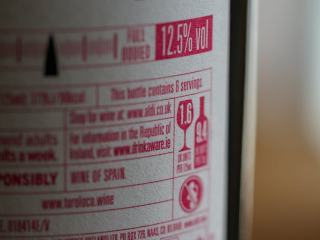
Alcohol content is the single variable drinkers have become most conscious of. Wines below 10 or 11 percent are growing in visibility because they let people drink wine on a weekday without a compromise they resent. German Riesling in Spätlese and Mosel Kabinett styles has always lived in that band, at roughly 8 to 10 percent, and lighter Loire whites, Sancerre included, are not far above it. Nothing about these wines is new; what changed is that their modest alcohol became a selling point rather than an apology.
Alongside them sits the dealcoholised category, where finished wine has its alcohol removed by vacuum distillation or reverse osmosis. Quality here has improved year on year, and the growth rate of no and low alcoholic beverages is the strongest in drinks, tracked by the drinks research firm IWSR across successive annual reports. It is still an imperfect product: removing alcohol removes body and aromatic carriers, so the best versions are aromatic whites and sparkling wine rather than structured reds. A dealcoholised wine is not grape juice, but it is not the same drink as the bottle it came from either.
For a drinker, the practical reading is simple. If the goal is less alcohol with no loss of interest, a naturally light wine beats a dealcoholised one almost every time. If the goal is none at all, the category has become respectable enough to serve to guests, which was not true a few years ago.
Chillable reds and the lightening of red wine
Red wine has been getting lighter, and cooler. The chillable reds trend covers low-tannin, high-acid red wines served at cellar temperature or below: Gamay from Beaujolais and the Loire, Pinot Noir from cooler sites, Cinsault, Trousseau, Poulsard and Sicilian Frappato. These are red grapes handled with a white wine reflex, with short macerations, little or no new oak and early bottling.
Two forces pushed this along at the same time. One is food: lighter reds suit the vegetable-forward cooking that restaurants now build menus around, and they survive a warm dining room. The other is the summer problem that every merchant knows, when a heavy Cabernet Sauvignon is unpourable in August and rosé absorbs the whole season. A chilled red splits the difference, and the trade has been happy to stock it.
The risk is treating lightness as a virtue in itself. A thin red wine chilled hard is still a thin red wine. What makes the style work is acidity and aromatic definition, not the absence of substance, and the best examples come from growers who could make a dense wine and choose not to. Comparing styles side by side, in red and white, is the fastest way to calibrate your own preference: our guide to red wines by style and region sets the lighter appellations against the structured ones.
Climate change is redrawing the map of wine grapes
Climate change is the trend underneath the others, because it changes what can be grown where. Harvests across France now start weeks earlier than they did in the 1980s, and warmer growing seasons raise potential alcohol in grapes that used to struggle to ripen. That is why some producers now pick earlier, ferment cooler and blend for freshness, and why late-ripening varieties are being replanted in places that once suited Sauvignon Blanc or Chardonnay perfectly.
The consequences run in both directions. Regions long considered marginal have become reliable: England for sparkling wine, Belgium and Denmark for still whites, higher-altitude sites in the southern Rhône and in Spain. Established appellations are experimenting with heat-tolerant grape varieties, and Bordeaux has authorised a short list of newcomers for exactly that reason. Elsewhere the pressure is water rather than heat, which is the live question in parts of South Africa, Australia and the Mediterranean basin.
For a drinker, the useful habit is to stop assuming a vintage tastes the way that wine region tasted twenty years ago. A cool-climate label may now produce ripe, generous wines, and a southern one may be picking for tension. Vintage notes matter more than reputation, which also explains why growers who understand their own grape varieties and how each behaves in a warming season are the ones whose bottles stay balanced.
Sustainability has become the baseline
Organic, biodynamic and HVE certified farming have moved from optional extra to expected standard, particularly for buyers under forty. France now has a substantial share of its vineyard area certified organic or in conversion, and the direction has not reversed even in difficult, mildew-heavy seasons. What is changing is the scope of the claim: lighter bottles to cut transport emissions, water and energy accounting in the winery, and cover crops and agroforestry in the vineyard itself.
Not all of it is equally meaningful, and the vocabulary is getting crowded. A certification audits practice; a slogan does not. The questions worth asking a merchant are narrow and answerable: is the estate certified, by whom, and since when. Glass weight is the other easy signal, since a needlessly heavy bottle carries a real carbon cost and tells you something about how the wine is being sold.
The quieter part of this trend is regional. Wine tourism has pushed estates to open their cellars, and visitors who have walked a vineyard ask different questions afterwards. That feedback loop has done more to spread sustainable practice among small French wine estates than any marketing campaign, and it is one reason lesser-known areas keep gaining attention: the Jura with its oxidative Savagnin, Corsica with Nielluccio and Vermentino, and the volcanic wines of the Auvergne.
Comparing today's most popular wines
The styles below are the ones gaining the most ground. None of them replaces the classics, and a cellar that holds only trends ages badly, but each answers a question conventional wine answers less well.
| Style | What it changes | Suits | Watch for |
|---|---|---|---|
| Natural wine | Minimal sulphites, spontaneous fermentation | Drinkers who want texture and terroir over polish | Bottle variation; store cool, drink young |
| Orange, skin contact | White grapes fermented on skins | Difficult food pairings, fermented and spiced dishes | Tannin in a white glass surprises first-timers |
| Low alcohol | Alcohol content around 8 to 11 percent | Weeknight drinking, long lunches | Often off-dry; check residual sugar |
| Chillable reds | Low tannin, served cool | Summer tables, vegetable-led cooking | Lightness without acidity tastes hollow |
| Dealcoholised | Alcohol removed after fermentation | Guests avoiding alcoholic beverages entirely | Best in aromatic whites and sparkling wine |
Questions drinkers ask about current wine trends
Is wine consumption really falling everywhere?
Not everywhere, but the global direction is down. The OIV reports declining world wine consumption over recent years, with the steepest falls in the historic producing countries of Europe and a softer market in China, while a few markets have held steady. Per-bottle spending has fallen less than volume, meaning people open wine on fewer occasions and choose more carefully when they do.
What are the top wine trends for 2026?
Four stand out: lower alcohol content across the board, chillable red wines as a year-round style rather than a summer novelty, skin contact and other textural white wines moving from wine bars into general retail, and certified organic or biodynamic farming becoming the default expectation instead of a premium claim. Sparkling wine, champagne included, continues to outperform still wine in most markets. Underneath all of it sits climate change, which is what makes freshness the defining quality of modern wine.
Does natural wine keep as long as conventional wine?
Usually not, and it is worth planning for. With little or no added sulphites there is less protection against oxidation and refermentation, so these bottles are more sensitive to warmth and movement. Stored cool and drunk within a few years, most show beautifully; left in a warm flat over a summer, they change quickly. Tasting attentively is the only reliable check, and our tasting guide, from glass to tasting room covers what to look for in a bottle that has travelled badly.
How wine is bought has changed as much as what is in the glass
Online wine buying is the quiet structural trend. It grew out of necessity during the pandemic years and kept a large share of the market afterwards, because a website can carry the small-production bottles a local shop cannot justify stocking. That has been good for growers in overlooked appellations and awkward for wines whose only argument was availability. The same shift has made provenance and shipping conditions part of the purchase decision, since a fine wine that spent a summer in a hot warehouse is no longer a fine wine.
Direct sales at the estate have grown in parallel, carried by wine tourism. Visitors who taste on site buy differently afterwards, and many small French wine producers now sell a meaningful share of their production without an intermediary. The wine trade has adapted by specialising, with merchants curating a point of view rather than listing everything.
What this means for a buyer is that the useful question has changed. It is no longer where to find a given bottle, since almost anything can be found, but whose selection to trust and how the wine was kept on its way to you. Ask how stock is stored, whether shipments pause during heatwaves, and how quickly wines are replaced after a vintage change. Those answers tell you more about quality in the glass than any trend report, and they are the same for a weeknight white as for a cellar-worthy red.