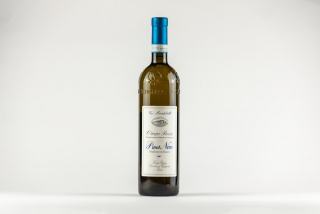
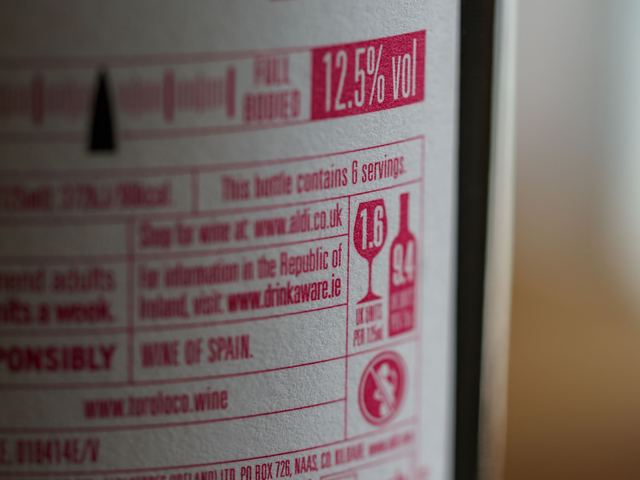
Wine label reading is the skill of turning the mandatory mentions printed on a bottle into a reliable guess at the wine inside. A French wine label leads with appellation and region rather than grape variety, so the vintage, the alcohol level and the producer name each tell you something specific about style and quality. Learn six mandatory mentions and a handful of optional terms, and almost any European bottle becomes legible in seconds.
Start here if you only remember three things
- A French wine label names the designation of origin, not the type of grape: Sancerre means Sauvignon Blanc, Chablis means Chardonnay.
- Six mentions are mandatory on every bottle of wine sold in the European Union, including alcohol content, country of origin and the sulfite warning.
- The small print about where the wine was bottled, at a wine estate or by a merchant, says more about quality than the largest word on the label.
Why a French wine label puts geography first
New World wine labels answer the question most people ask out loud before they drink: which grape is in the bottle? A Napa Valley red wine says Cabernet Sauvignon across the front, a South Africa white says Chenin Blanc, and the wine region sits underneath in smaller letters. That is the basic standard from California to Australia, and it makes the flavour easy to anticipate. French wine labels invert that order. They name the place, and the place implies the grape, because the rules of each appellation specify which grape varieties may be planted, how much fruit each vineyard may carry, and how the wine must be made.
That logic is why a Gevrey-Chambertin label does not print Pinot Noir and a Pouilly-Fuissé label does not print Chardonnay. The appellation already said it. Understanding wine labels from France therefore means learning a small map rather than a long list of grape names, and the map is stable: the boundaries of a French wine region change far more slowly than fashions in grape variety do. Once the geography clicks, the label stops being decoration and starts behaving like a specification sheet. A place carries its climate with it, and climate is what decides the style you will drink: the same grape variety grown on a cool slope and on a warm plain gives two different wines, and the appellation name is the shortest way to know which one you are holding.
The same approach governs most European wine. Italian, Spanish and German wine labels are built on designations of origin too, with their own vocabulary layered on top. Read a wine label from Rioja and you are reading the same idea in Spanish. Our map of the French wine regions and their appellations is the shortest way to attach names to places before you shop.
The key information every bottle must carry
European law fixes what a wine label must show, and the list of mandatory items is shorter than most people expect. Everything beyond it is optional, which is exactly why the optional part repays attention.
| Mandatory mention | What it looks like | What you learn from it |
|---|---|---|
| Designation of origin | Appellation Sancerre Controlee, AOP, IGP | The production rules the wine was made under |
| Alcohol content | 13 % vol. | Ripeness, body and likely warmth on the palate |
| Nominal volume | 75 cl, 37,5 cl, 150 cl | Format, and how fast the wine will age |
| Bottler name and address | Mis en bouteille au chateau, postcode | Who took responsibility for the finished wine |
| Country of origin | Produce of France, Product of Italy | Where the grapes were grown and vinified |
| Allergen statement | Contains sulphites, or contains sulfites | Mandatory above 10 mg of sulfite per litre, so on nearly every wine |
A seventh block arrived recently. Under regulation (EU) 2021/2117, wines from the 2024 harvest onwards must also declare their ingredients and their energy value, and producers are allowed to place the full list behind a QR code printed on the back label. Two bottles from the same wine estate, one from 2023 and one from 2025, can therefore carry visibly different back labels without anything having changed in the vineyard.
The vintage, by contrast, is optional. It appears on the overwhelming majority of still wines and is absent from most non vintage Champagne and many branded blends, where consistency across years is the point.
Several other claims are optional but regulated, and they are the ones a careful wine shop customer looks for. An organic wine carries the European leaf logo and a certifier code, which covers the vineyard and, since 2012, the cellar; the word organic alone, with no code, guarantees nothing. A vegan claim refers to the fining agents used to clarify the wine, not to the grapes. Sugar levels on sparkling wines are standardised across Europe. Terms such as reserve, on the other hand, are free in France, whatever they may mean in Spain or Italy, so the same word can be a legal promise on one bottle and a marketing flourish on the next.
Appellation of origin, the backbone of the label
AOC, AOP and the words in between
Appellation d'origine controlee is the historic French tier, created in 1935. Since the 2012 European reform it sits inside the wider protected designation of origin scheme, written AOP in French and PDO in English, and both forms remain legal on a French wine label. A bottle reading Appellation Chablis Controlee and a bottle reading Chablis AOP carry the same guarantee: defined boundaries, authorised grape varieties, a yield ceiling, a minimum alcohol level and a tasting panel before release.
The narrower the appellation, the tighter the rules. Burgundy wine is the clearest example of this pyramid, running from a regional appellation covering the whole region, to a village name, to a named premier cru vineyard, to the 33 grand cru climats that sit at the top. Alsace organises its own hierarchy around 51 grands crus, and Champagne ranks its villages rather than its plots. Reading a wine label from Burgundy is largely a matter of counting how many words separate the region from the parcel.
IGP, Vin de France and why they are not failures
Below the appellation tier, a geographical indication such as IGP Pays d'Oc covers a broad area with looser rules, and those labels are allowed to state the type of grape on the front. Vin de France carries no geographical indicator at all, yet since 2009 it may show both the grape variety and the vintage. Some of the most interesting bottles in any wine shop live there, made by growers who wanted to plant something their appellation forbids. A lower tier on the label describes a narrower legal promise, not a lower quality of the wine.
Grape variety, the information French labels leave out
Because the appellation implies the planting, the grape is often missing from the front of a French wine label. That is the single biggest obstacle for anyone learning how to read wine labels, and the fix is a short mental table. Sancerre and Pouilly-Fume mean Sauvignon Blanc. Chablis, Meursault and Montrachet mean Chardonnay. Vouvray and Savennieres mean Chenin Blanc. Gigondas leans on Grenache, Hermitage on Syrah, Pauillac on Cabernet Sauvignon, and any red Burgundy on Pinot Noir.
Blends complicate the picture only slightly. A Bordeaux red wine is almost always a blend, and its balance shifts across the estuary: Cabernet Sauvignon dominates on the Left Bank, Merlot on the Right Bank. Chateauneuf-du-Pape permits thirteen grape varieties, so the label tells you the recipe is broad without telling you the proportions. Southern rose wines behave the same way: a Provence label names the place, while the Grenache, Cinsault and Syrah behind the flavor stay unwritten. Merlot is the clearest case of a grape hidden by geography, since a Saint-Emilion built mostly on Merlot never prints the word anywhere on the bottle. Our guide to the French grape varieties behind each appellation turns those pairings into a list you can check while you shop.
One warning sign is worth knowing. When a label from outside the appellation system names a single grape in very large letters and places its origin in tiny type, the grape is doing marketing work. The reverse habit, a modest grape mention next to a precise vineyard name, usually signals a producer who trusts the place to speak.
Wine classification terms that carry weight
A handful of optional terms genuinely change what you should expect, and a handful are decoration. Grand cru is the highest wine classification in Burgundy, Alsace and Champagne; in the Medoc it refers instead to the 61 chateaux listed in the 1855 classification, which is a different system using similar words. Premier cru sits one step below the Burgundian grand cru and names a specific vineyard with a recognised track record.
Vieilles vignes, old vines, has no definition in law. It usually indicates a parcel where every vine is past thirty years of age, with lower yields and more concentration, but nothing forces a producer to be honest about it. Cru bourgeois, restructured in 2020 into three annually assessed levels, applies to Medoc estates outside the 1855 list. Cuvee simply means a selection or a blend, so cuvee prestige tells you this is the house's top wine and nothing about how good that wine is.
Spanish terms work differently again: gran reserva is a promise about ageing time in oak and bottle, not about a vineyard. Across the Channel, English sparkling wine has built its reputation on grape and producer names rather than any classification at all. If a term stops you mid aisle, our glossary of wine label terms defines it in one line.
Where the wine was bottled, and why the small print matters
The bottling mention is printed in small type and repays attention more than any other optional element of a wine label. Mis en bouteille au chateau or au domaine means the wine was bottled at the estate that grew the fruit, so one team controlled the vineyard, the cellar and the moment of bottling. Estate bottled is its English equivalent.
Mis en bouteille dans la region de production means a merchant bought wine in bulk and bottled it somewhere within the region. That is not a defect, and several celebrated houses work this way, but it does mean the name on the front is a brand rather than a farm. Mis en bouteille par, followed by a company name and postcode with no estate mention, is the most anonymous of the three.
Read this line together with the address. A postcode inside the appellation is consistent with estate bottling; a postcode two hundred kilometres away on an AOP bottle tells you the wine travelled in tank before it ever met glass.
Turning a label into a prediction of taste
Once the mentions are decoded, a label supports a genuine forecast. Alcohol by volume, abv, is the quickest proxy for style: a dry white at 12 % will be brisk and citric, the same appellation at 14 % will feel broader and riper. On sparkling wines, the sweetness scale printed near the volume runs from brut nature through extra brut, brut and extra dry to sec and demi sec, and it refers to residual sugar rather than to fruitiness, which is why an extra dry Prosecco tastes sweeter than a brut Champagne.
The vintage anchors the rest. On a wine from a cool region, a warm year shifts the wine towards ripeness and a cool year towards tension, and a vintage chart tells you which was which. Tasting notes on the back label deserve more scepticism: they are written by the seller, and the useful sentence is usually the one suggesting food pairings, not the one about aromas. For that part of the decision, our guide to matching food and wine by structure is more dependable than any back label, because it works from the elements a label actually gives you.
Put the pieces together and the method becomes routine. Place first, then tier within that place, then vintage, then alcohol, then the bottling line. Five glances, and you can choose a wine on evidence instead of on the prettiness of the drawing. Nothing about it requires a level 2 award or a career in wine tasting, and the habit sharpens every time you open a bottle, drink it slowly and compare what you predicted with what you poured. The key elements never change from one label to the next, which is what makes the method worth learning once.
Questions readers ask about reading a wine label
What information is on a wine label by law?
Six mentions are mandatory in the European Union: the designation of origin, the alcohol content, the nominal volume, the bottler's name and address, the country of origin and the sulfite allergen statement. Wines from the 2024 harvest onwards must also give ingredients and energy values, which may sit behind a QR code.
Why do French wine labels not show the grape variety?
Because the appellation already defines which grapes may be used. Sancerre means Sauvignon Blanc and Chablis means Chardonnay under the rules of those appellations, so printing the grape would repeat information the place has already given. Labels outside the appellation system, such as IGP and Vin de France, are free to name the grape.
Does mis en bouteille au chateau mean better wine?
It means the wine was bottled at the estate that grew the grapes, so a single team controlled the whole chain. That consistency correlates with care, but it is not a quality ranking: excellent wines are bottled by merchants, and modest wines are bottled at their estate.
What does grand cru mean on a wine label?
In Burgundy, Alsace and Champagne it is the top tier of the local wine classification, attached to a named vineyard or village. In Bordeaux's Medoc it refers to the 1855 classified growths, an entirely separate list. The same two words therefore describe two different systems depending on the region.
How can I tell how sweet a wine is from the label?
On sparkling wines, look for the scale from brut nature to demi sec, which states residual sugar directly. On still wines, France rarely prints sweetness, so use the appellation and the alcohol level: a low figure on a Loire or German wine often indicates sugar left unfermented.
Is the vintage always printed?
No. The year the grapes were harvested is optional, and it is deliberately absent from most non vintage Champagne and from branded blends built to taste the same every year. When it is present, it is one of the most useful pieces of information on the bottle.
Where to practise
The fastest progress comes from comparing two bottles at once. Take a village wine and a premier cru from the same producer or the same winery, read both labels line by line, then taste them side by side. The differences that seemed like legal trivia become differences you can smell, and the vocabulary sticks because you drank it. Browse our selection of French wines chosen estate by estate, and contact the team if a label in our range raises a question that the glossary does not settle. Understanding wine starts with the bottle in front of you.