Chablis premier cru vs village comes down to land: premier cru wine grows on about forty named climats, the côtes and slopes of the Chablis appellation, while village Chablis blends Chardonnay from the wider AOC. In a good vintage the step buys depth, complexity and longer ageing; in a thin one, very little.
- Chablis village: a white wine of the Bourgogne region, saline, green apple and lemon, to drink within three to five years.
- Chablis premier cru: the same Chardonnay from a named premier cru vineyard on Kimmeridgian limestone, with more texture and ten years of ageing potential.
- Chablis grand cru: seven climats on one hillside, the top of the appellation.
- The domaine matters as much as the label, and a premier cru wine shines at a December dinner with oysters.
What is the difference between Chablis and Premier Cru?
Both are white wine made from 100 % Chardonnay in the northernmost part of Burgundy, and both carry the Chablis AOC name on the label. The difference is geography. The Chablis appellation is a four-level ladder: Petit Chablis at the bottom, then Chablis (the "village" level), then Chablis Premier Cru, then Chablis Grand Cru at the top. Each rung narrows the area the fruit can come from and tightens the rules on yield.
A village Chablis can come from any vineyard classified for the appellation, on either bank of the Serein river, and producers often blend several plots to get balance. A premier cru must come from one of the classified premier cru vineyards, and the name of the climat (Fourchaume, Montée de Tonnerre, Vaillons, Montmains and so on) may appear on the label. Those premier cru sites sit mostly on slopes rather than flat ground, which means better drainage and more sun, and in a cool climate region like this one, a few extra hours of sun per week changes ripeness a lot.
So the wine inside the bottle is not a "better recipe". It is fruit from better placed land, usually handled with more care because the grower knows the plot can deliver more. Our overview of Burgundy and its grand crus places Chablis within the wider Bourgogne hierarchy, which follows exactly the same logic of ranking land rather than producers.
On this page
- What is the difference between Chablis and Premier Cru?
- How the Chablis vineyards are ranked, from Petit Chablis to Grand Cru
- How does Chablis Premier Cru compare to village in the glass?
- What are the characteristics of Chablis Premier Cru climats?
- Does the producer matter more than the classification?
- What is the ageing potential of Chablis wines?
- Which Chablis wines are worth the extra spend?
- How to identify Chablis Premier Cru wines on the shelf
- Choosing between them for a December dinner
- The verdict on the step up
How the Chablis vineyards are ranked, from Petit Chablis to Grand Cru
The Chablis wine region covers around 5,800 hectares, according to the Bureau Interprofessionnel des Vins de Bourgogne (BIVB). The bulk of it is village Chablis; premier cru vineyards take roughly one hectare in seven, and the seven grand cru climats share a single hillside of about one hundred hectares facing the town. The ranking is old: the premier cru list was set out in the twentieth century and extended several times, which is one reason purists argue some newer premier cru sites do not deserve the badge.
| Level | Where the fruit grows | Typical style | Drinking window | Relative price |
|---|---|---|---|---|
| Petit Chablis | Plateau tops, Portlandian limestone | Light, citrus, simple | 1 to 3 years | Entry level |
| Chablis (village) | Wide area, both banks, mostly Kimmeridgian soil | Crisp, saline, green apple | 2 to 5 years | Moderate |
| Chablis Premier Cru | About forty named climats on slopes | More texture, mineral length | 4 to 12 years | Intermediate |
| Chablis Grand Cru | Seven climats on one southwest facing hill | Powerful, dense, long | 8 to 20 years | Highest |
The soil explains why the lines are drawn where they are. Most village, premier cru and grand cru vineyards sit on Kimmeridgian limestone, a marl and clay layer packed with fossilised oyster shells (the small Exogyra virgula), named after the English village of Kimmeridge where the same Kimmeridge clay surfaces. Petit Chablis mostly grows on the younger Portlandian limestone of the plateaus, which gives a leaner wine. Kimmeridgian limestone is the reason Chablis wines taste of chalk and sea spray rather than of butter, and it is the soil shared by the top levels.
How does Chablis Premier Cru compare to village in the glass?
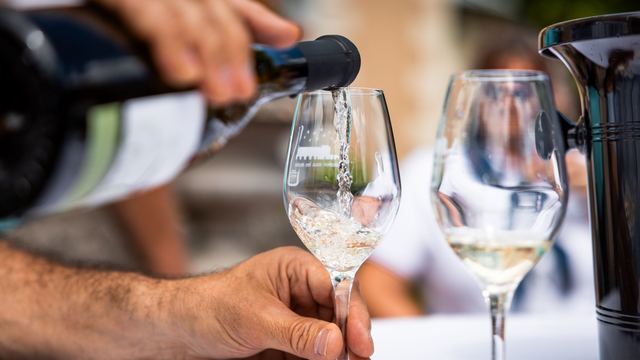
Pour the two side by side, ideally blind, and the difference shows first on the palate rather than on the nose. A good Chablis village smells of lemon, green apple, white flowers and wet stone; so does a young premier cru. On the palate, the premier cru tends to carry more weight, a slightly oilier texture and a finish that lingers several seconds longer. The acidity is often the same; what changes is the flesh around it.
Blind tasting panels regularly mix the two up with young wines, which is one reason forum threads on the quality gap between village and premier cru never close. The gap grows with time. After four or five years in bottle, village Chablis starts to fade or holds steady at best, while a premier cru develops notes of hazelnut, honey, dried herbs and that savoury, almost iodine side that people describe as "oyster shells". If you only ever drink Chablis within a year of release, you are seeing premier cru at its least convincing.
What sounds like a small difference on paper is a clear sign in the mouth: complexity. A village wine usually shows one or two layers, fruit and salt; a premier cru adds a third, a savoury or smoky note that keeps changing in the glass. That complexity is the main sign that the appellation rules and the extra care paid off. Wine people tend to talk about "tension" for the left bank and "concentration" for the right bank, and a side by side tasting is the quickest way to understand what those terms mean. Serving both at the same temperature, in the same glass, removes the other variables and makes the difference easier to taste.
Oak changes the comparison too. Most village Chablis is made in stainless steel tanks to keep it fresh, and the stainless style is a clear sign of the appellation's taste for purity. Many premier cru wines see part of their ageing in oak barrels, usually older ones, which adds a touch of roundness without the vanilla of a Côte de Beaune white. If you dislike any sense of wood in white burgundies, ask the merchant how the wine was made; our guide to reading French wine labels shows where "élevé en fût" or similar mentions appear.
What are the characteristics of Chablis Premier Cru climats?
The premier cru climats are grouped in two families, and knowing which bank a wine comes from tells you more than the word "premier" itself.
Right bank: riper, rounder, closer to grand cru
On the right bank of the Serein, next to the grand cru vineyards, sit Fourchaume, Montée de Tonnerre, Mont de Milieu and Vaucoupin. Many of these slopes are southwest facing or south facing, catch the afternoon sun and produce broader, riper wines. Montée de Tonnerre is often called the closest thing to a grand cru without the title; Mont de Milieu gives generous, sunny wines; Fourchaume is large and varies a lot from one producer to the next.
Left bank: tighter, more mineral, slower to open
On the left bank, where the côtes are gentler and the climats dits "de rive gauche" produce a lot of the appellation's premier cru volume, Montmains, Vaillons, Côte de Léchet, Beauroy, Vosgros and Vau de Vey mostly face southeast and ripen a little later. The wines are sharper, more linear and saline, and they often need three or four years before they show their best. Vaillons and Montmains are widely available and a good first step into premier cru; Vau de Vey, on steep slopes, has a more precise, almost austere profile that rewards patience.
This split matters when you compare prices. A left bank premier cru from a good vintage can feel closer to a very good village wine when young, while a right bank bottle already tastes "upgraded".
Does the producer matter more than the classification?
Often, yes. The Chablis producers with the highest reputation (Raveneau, Vincent Dauvissat, William Fèvre, Louis Michel, Domaine Bernard Defaix, Domaine des Malandes and a few others) make village wines that outperform many premier cru labels from large cooperatives or négociants. Their premier cru sites are also where the level shows most clearly, because low yields, hand harvest and careful sorting let the terroir speak.
People who talk about Chablis often talk first about two names, Raveneau and Fèvre. Domaine François Raveneau farms small plots of premier cru and grand cru and makes wines that sell out on allocation, so access to them is limited; Raveneau Montée de Tonnerre or Raveneau Butteaux are the reference points critics use when they talk about premier cru quality. William Fèvre, one of the largest estates of the appellation, owns a lot of premier cru and grand cru land and gives much easier access to single climat bottles, from Vaulorent (part of Fourchaume, just above Fontenay-près-Chablis) to Montmains. Growers based in Fontenay-près-Chablis, Fleys, Poinchy or Milly produce a lot of the left and right bank wines you will find in shops, and many still work in stainless steel tanks for their village lot, keeping barrels for the premier cru.
A rough rule works well in practice: a top producer's village Chablis beats an average premier cru, and a top producer's premier cru beats an average grand cru. If your budget allows only one step up, move up in producer quality before you move up in classification. Buying a premier cru from an unknown label on promotion is the most common way to pay for the word without getting the wine.
Vintage is the second filter. Chablis sits at the northern limit for ripening Chardonnay, and spring frost or hail can cut the harvest sharply. In cool, wet years, premier cru vineyards on warm slopes keep their advantage; in very hot years, village wines from cooler sites can be the fresher, better balanced bottles. Our guide to great and difficult vintages covers the recent run of years.
What is the ageing potential of Chablis wines?
Ageing potential is where the premier cru earns its place. As a general guide from producers and the BIVB:
- Petit Chablis: drink within one to three years.
- Chablis village: two to five years, occasionally more from the best sites and producers.
- Chablis Premier Cru: four to twelve years, with the best right bank climats going beyond fifteen.
- Chablis Grand Cru: eight to twenty years or more.
Many premier cru wines go through a closed, quiet phase somewhere between their third and sixth year, when the fruit fades before the mature notes arrive. Opening one then can be disappointing and makes the village bottle look like the smarter buy. If you store wine, buy premier cru to keep and village Chablis to drink now. That division alone justifies the difference in price for most cellars.
Which Chablis wines are worth the extra spend?
The step from village to premier cru is worth it in four situations:
- You want to keep the bottle five years or more.
- The wine will go with food that has weight: scallops, lobster, poultry in cream sauce, hard cheeses such as Comté.
- You know the producer and the climat, and the vintage was a good one.
- The occasion is a special dinner, for instance in December, when the table is built around shellfish.
It is rarely worth it for an aperitif, for a large party where the glass is filled and forgotten, or with very light dishes where a crisp village wine is simply more refreshing. On wine investment grounds, only grand cru and a handful of premier cru bottles from the most famous estates build secondary market value; for everyone else, premier cru is a drinking choice, not an asset.
How to identify Chablis Premier Cru wines on the shelf
The label must say "Chablis Premier Cru" or "Chablis 1er Cru". Look for the name of the climat just below or next to it: a single named vineyard such as "Montée de Tonnerre" usually signals a more precise wine. A premier cru label without any climat name means the wine is a blend of several premier cru plots, which is legal and can be very good, but tells you less. Beware of fantasy names or lookalike wording: "Vieilles Vignes" or "Cuvée Prestige" on a village label is a producer's own mention, not a classification.
Choosing between them for a December dinner
December is when most Chablis is sold and opened, partly because oysters are at their best and partly because a festive table asks for a white wine with some presence. A simple plan works well. Open a village Chablis with the oysters and raw shellfish in December, where its salinity and green apple freshness mirror the brine. Move to a premier cru, ideally five to eight years old, for the fish course or a white meat in sauce, where the extra texture holds up.
If you buy in November for December, give the premier cru a day or two standing upright and serve it around 11 to 13 °C rather than straight from the fridge; too cold, and the difference with village Chablis disappears. Guests who compare the two glasses at a December table almost always notice the gap, which is the best tasting lesson you can give. For more ideas, our page on foods and wines that work together goes dish by dish, and the white wines section lists other Chardonnay styles to set beside Chablis.
The verdict on the step up
The step from village Chablis to premier cru is real but conditional. The classification guarantees better placed vineyards, not a better wine: it pays when the producer is serious, the vintage is sound, the bottle is kept a few years and the dish has enough weight. Buy village Chablis to drink this season, keep premier cru for the table in two or three Decembers from now, and choose the producer before you choose the level.