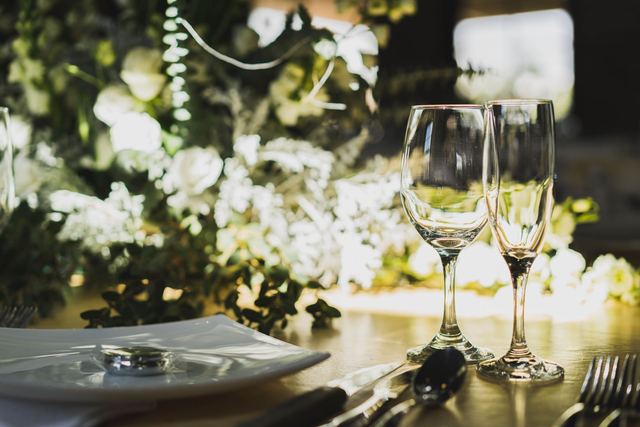
Wedding wine is the red, white, rose and champagne served to guests from the toast to the last dance. A wedding of 100 people usually needs 50 to 60 bottles of still wine plus 15 to 20 bottles of champagne. To choose and estimate quantities, start from the reception length, the food and your budget.
The numbers to keep in mind
- One standard 75 cl bottle pours five glasses of still wine, or six flutes of sparkling wine.
- Plan roughly one glass per drinking guest per hour of reception, after the toast.
- For 100 guests over five hours, count about half a bottle of still wine per guest, and one flute each for the toast.
- Buy by the case, with a margin of 10 percent, and ask your wine shop about returns on unopened bottles.
How much wine for wedding guests, per hour and per person?
The most reliable way to count wedding wine is to start from glasses, not bottles. A standard bottle of wine holds 75 cl, which gives five generous glasses of 150 ml of red or white wine. A bottle of sparkling wine gives six flutes of about 125 ml, because a flute is poured smaller. From there, the rule used by most caterers and wine merchants is simple: an adult who drinks will have about one glass per hour during the meal and the evening, a little more in the first two hours and less once the dancing starts.
Take a wedding reception of 100 guests that runs five hours, from the drinks after the wedding ceremony to the end of dinner. If around 80 of those people drink wine, and the other 20 prefer beer, spirits or soft drinks, you need about 80 guests times four glasses once the toast is done, which gives 320 glasses. Divide by five glasses per bottle and you reach 64 bottles. Many couples round this to 60 bottles and keep a small reserve in the store room of the venue.
These figures are an average. Family and friends who love wine will drink more; a daytime event in summer, with a long cocktail hour, will lean toward white wine and rose; a winter dinner will lean toward red. Adjust the count to the crowd you actually know, not to a generic guest.
A useful planning tip: divide the total into three blocks, the toast, the dinner and the party, and estimate each one step by step. It is easier to divide a problem than to guess one big number, and it gives the caterer and the venue team clear quantities to work with.
The quick table: bottles for a wedding of 100 people
| Length of reception | Still wine (bottles) | Champagne for the toast | Best split |
|---|---|---|---|
| 3 hours (lunch) | 35 to 40 | 15 to 17 | More white and rose |
| 5 hours (dinner) | 55 to 65 | 17 to 20 | Half red, half white |
| 7 hours or more (evening party) | 75 to 90 | 20 plus sparkling for dancing | Add a crowd pleaser white |
The champagne column assumes one flute per guest for the toast, including non drinkers who raise a glass, plus a little extra for the wedding cake. If sparkling wine is the only drink during the cocktail hour, double it.
What types of wine to serve at the reception?
A good wedding wine list is short. Three wines are enough for most receptions: a sparkling wine for the toast, a white wine and a red wine for the meal. A rose can replace part of the white on a summer day. Guests do not want to choose from a long list; they want a glass that is easy to enjoy with food and conversation.
White wines that please a crowd
Choose a dry, fresh white with moderate alcohol content. A Sauvignon Blanc from the Loire, an unoaked Chardonnay from Burgundy, a Pinot Grigio or a dry Riesling from Alsace all work. They are easy to serve cold, they suit starters and fish, and they stay pleasant as the evening warms up. A Chablis is a classic, popular option, and a Pinot Blanc is an affordable alternative with a fruity, friendly flavour. Our page on the main styles of white wines and their grapes helps narrow the choice by taste rather than by label.
Red wines that do not tire the palate
For red, avoid the most tannic wines. A Pinot Noir, a Cotes du Rhone, a supple Bordeaux red blend or a Malbec will match most wedding menus, from poultry to beef. A Merlot based Bordeaux, a Cabernet from the South of France or a Rioja are other good options, and an organic red from a small estate adds a story to share with guests. Keep the red a little cool: at around 16 degrees it tastes fresher and lighter, which matters in a warm room full of people.
Rose and sparkling wine
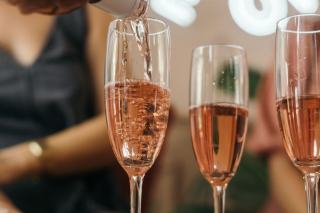
A dry Provence rose is a classic on a summer day and often replaces a third of the white. For the toast, real champagne is traditional, but a Cremant de Loire, de Bourgogne or d'Alsace offers the same method and very good quality for less money, and a Spanish Cava is another alternative; the difference is explained in our comparison of cremant and champagne and what the price gap buys.
How to choose wedding wine without a sommelier?
Start with the menu, then the season, then the budget. The food decides the style, the season decides the balance between red and white, and the budget decides how far up the range you can go. A simple method:
- Ask the caterer for the final menu and list the main dish of each course.
- Pick one white and one red that fit the whole meal instead of one wine per dish.
- Organise a small tasting at home with the couple and two or three friends, with two or three candidates in each colour.
- Keep the wine the whole group enjoys, even if it is not the favourite of the most expert taster.
A tasting of this kind takes an evening and avoids the common mistake of buying 60 bottles of a wine that only one person loves. Many merchants will open sample bottles or sell a mix of wines in one case so you can taste before you select and purchase the full order. Ask for their recommendations: a good merchant will provide tips drawn from real wedding experience, and it is the best way to learn and explore a region you do not know yet.
How to pair wine with wedding food?
Pairing food and wine at a wedding is about avoiding clashes, not finding a perfect match for each plate. Fresh whites go with seafood, salads and goat cheese; round whites like Chardonnay go with cream sauces and poultry; light reds go with duck, veal and mushrooms; structured reds go with beef and lamb. Spicy dishes and sweet desserts are the hardest to match, and a sparkling wine or a sweet wine is usually the answer. For more detail by dish, see how foods and wines work together at the table.
The wedding cake deserves a thought of its own. A brut champagne with a sweet cake tastes sharp; a demi-sec sparkling wine or a dessert wine suits it much better, and you only need a few bottles.
How to set a wedding wine budget?
The wine budget is usually one of the largest drink lines of the day, so fix it early. Multiply the number of bottles you counted by a price per bottle you are comfortable with, then compare the total with the cost of the venue's own drinks package. Three points change the budget more than the choice of grape:
- Corkage fees: some venues charge per bottle opened if you bring your own wine, which can cancel the saving.
- Buying by the case: most wine shops offer a discount on cases of six or twelve, and some take back unopened bottles.
- Service: bottles do not pour themselves; check who opens, chills and serves them, and whether that service is included.
A balanced budget spends a little more on the wine for the toast and the red served with the main course, and less on the white for the cocktail hour, when guests talk more than they taste.
Where to buy wedding wine and when to order?
You can buy from a local wine shop, an online store, directly from an estate in France, or through the caterer. A specialist merchant gives advice and delivery; an online shop is convenient for comparing many labels; an estate gives the best story for your guests. Whichever you choose, read the delivery and returns conditions, and the privacy policy if you create an account, before you purchase.
Order six to eight weeks before the day. This leaves time for a tasting, for a second delivery if a wine is out of stock, and for the bottles to rest a couple of weeks after transport. Store them lying down, away from light and heat, until the day before.
On the wedding day: storing and serving the bottles
Deliver the wine to the venue the day before if possible, and chill white, rose and champagne at least three hours ahead. Serve white around 8 to 10 degrees and red around 15 to 17; our guide to wine serving temperature from fridge to glass gives the details by style. Put someone in charge of the bar so bottles are opened as needed, not all at once.
Opened bottles left at the end of the reception are not lost: recork them and share them with family and friends the next day. Unopened bottles become a gift, a memory of your special day, or the start of your first anniversary dinner as husband and wife.
Champagne quantities, beer and spirits, and choosing the wine
How many bottles of champagne for 100 guests?
For a single toast, 17 to 20 bottles of champagne are enough for 100 guests, since each bottle pours six flutes. If sparkling wine is also served during the cocktail hour, plan 35 to 40 bottles.
Should I offer beer and spirits as well as wine?
Yes, in most cases. A part of the guests will always prefer beer or a mixed drink, and offering it reduces the wine you need by about a fifth.
What is the best wedding wine?
The best wedding wine is the one that suits your menu and that most of your guests enjoy. A fresh white, a supple red and a good sparkling wine chosen after a short tasting will please far more people than a single prestigious label.