A Cru Bourgeois Bordeaux is a red wine from one of the eight Médoc appellations, made by a château ranked in the official Classement des Crus Bourgeois du Médoc. The 2020 classification listed 249 châteaux in three tiers, and most of their bottles sell well under fifty euros.
The short answer for a 50 euro budget
- A Cru Bourgeois Exceptionnel from a good vintage often gives more wine per euro than a classified growth at the same price.
- Below fifty euros, the only classified growths you will find are some fifth growths, a few fourth growths and second wines.
- Read the tier on the label: Cru Bourgeois, Cru Bourgeois Supérieur or Cru Bourgeois Exceptionnel are not the same promise.
What is a Cru Bourgeois Bordeaux?
The Cru Bourgeois is a quality level reserved for red wines of the Médoc, the left bank peninsula north of the city of Bordeaux. The term is old: in the Middle Ages, the "bourgeois" were the merchants and citizens of Bordeaux who bought land in the Médoc and built their own wine estates. Their properties were not aristocratic domains, but many of them produced wine good enough to sell under the château name.
Today the Cru Bourgeois name is protected. A château can only print it on the label if it has been admitted to the Classement des Crus Bourgeois du Médoc, the classification run by the Alliance des Crus Bourgeois du Médoc, the association of the producers. The classification covers red wine only, and only from eight appellations (AOC): Médoc, Haut-Médoc, Listrac-Médoc, Moulis-en-Médoc, Margaux, Saint-Julien, Pauillac and Saint-Estèphe. A Cru Bourgeois Bordeaux from Graves, Pessac or the right bank does not exist.
For a wine lover, the Cru Bourgeois level answers a practical question: which Médoc châteaux outside the famous 1855 list make serious wine? The Bordeaux wines of the left and right banks number in the thousands of properties, and the Cru Bourgeois selection is one of the few public filters that sits between the generic Bordeaux AOC and the great classified growths.
How is the classification of Crus Bourgeois done?
The current system dates from 2020. After years of legal disputes, the Alliance des Crus Bourgeois returned to a classification in three levels, valid for five years instead of a yearly award. The 2020 classement des Crus Bourgeois covered the harvests 2018 to 2022 and listed 249 châteaux:
- Cru Bourgeois Exceptionnel: 14 châteaux, the top tier;
- Cru Bourgeois Supérieur: 56 châteaux;
- Cru Bourgeois: 179 châteaux, the base level.
A new classification was published in 2025 for the following vintages, so always check which list the bottle in front of you belongs to: the tier printed on the label applies to that year, not to the château for ever.
What does a château have to prove?
Each candidate château submits a file and several vintages for blind tasting by an independent panel. For the base tier, the blind tasting is the main criterion. For the two upper tiers, the file must also show environmental certification, work in the vineyard and the cellar, and the way the château welcomes visitors and markets its wine. The whole procedure is audited by an independent certification body, and each bottle carries a sticker with a unique code that lets the buyer check it online.
This is a real difference with the 1855 list: a Cru Bourgeois can move up or down every five years, which puts pressure on quality at each château.
A short history of the Crus Bourgeois
The first written list came in 1932, when Bordeaux brokers drew up a selection of 444 Crus Bourgeois of the Médoc, under the authority of the Chamber of Commerce and the Chamber of Agriculture of the Gironde. That list was never made official by a ministerial decree, but it was used for seventy years.
In 2003, a formal classification of 247 châteaux was published, with the same three tiers as today. Châteaux that had been left out took the matter to court, and the 2003 classement was annulled in 2007. Between 2010 and 2019, the Cru Bourgeois name became an annual label granted wine by wine, with a single tier. The return to a three-tier classification in 2020 closed that chapter.
The history explains a quirk of the market: some well-known Médoc châteaux left the system along the way and no longer print the term. Château Sociando-Mallet in the Haut-Médoc is the example most wine merchants quote. Its wine is often compared with classified growths, yet you will not find the Cru Bourgeois name on its label. So a château missing from the list is not always a weaker wine.
Cru Bourgeois or classified growth: what are the differences?
The 1855 classification ranks 61 red wine châteaux, 60 of them in the Médoc plus Château Haut-Brion in Graves, in five ranks from first to fifth growth. It was drawn up for the Paris Universal Exhibition from the prices of the time and has barely changed since. The Cru Bourgeois classification works on a different logic.
| Point | Cru Bourgeois | 1855 classified growth |
|---|---|---|
| Number of châteaux | 249 in the 2020 list | 61 red wines |
| Tiers | Cru Bourgeois, Supérieur, Exceptionnel | First to fifth growth |
| Revision | Every five years, with tasting | Fixed since 1855 (one change in 1973) |
| Area | Eight Médoc appellations | Médoc and one Graves château |
| Typical price | Mostly under 40 euros | From about 35 euros to several hundred |
The 1973 change is the promotion of Château Mouton Rothschild to first growth. For a buyer, the key point is that the classified growth rewards a reputation built over a century and a half, while the Cru Bourgeois rewards recent wines tasted blind.
The two lists also cover different soils. Most classified growths sit on the deep gravel of Margaux, Saint-Julien, Pauillac and Saint-Estèphe, close to the estuary. Many Cru Bourgeois châteaux farm the Haut-Médoc, the northern Médoc, Listrac and Moulis, with more clay and limestone, which gives firmer, fresher wine with more Merlot in the blend.
Which Bordeaux to choose under fifty euros?
With fifty euros, the choice is less obvious than the labels suggest. The classified growths within reach are mostly fifth growths of the Haut-Médoc and Pauillac, plus a few fourth growths in lighter years. Château Cantemerle, Château Belgrave, Château Camensac and Château La Tour Carnet, all in the Haut-Médoc, are the names that most often sit around that price at French retailers. Above that line, a grand vin of Saint-Julien or Margaux quickly costs double.
The other route to a classified growth is the second wine, the bottle a château makes from younger vines or lots not kept for the grand vin. It carries the prestige of the estate, but not the classification itself: a second wine is never a classified growth on its own.
At the same price, a Cru Bourgeois Exceptionnel or Supérieur is usually the château's grand vin, from its best parcels. That is the core argument for the category: you are buying the top wine of a serious Médoc estate rather than the entry wine of a famous one. For a bottle to open within five years, this is often the better selection. For a bottle to keep twenty years, a fifth growth from a great vintage keeps an edge. Our guide to great and difficult Bordeaux vintages helps with that second choice.
A simple rule by budget
- Under 20 euros: a Cru Bourgeois from the Médoc or Haut-Médoc appellation, from a ripe year such as 2018, 2019 or 2020.
- 20 to 35 euros: a Cru Bourgeois Supérieur or Exceptionnel from Listrac, Moulis, Saint-Estèphe or Margaux.
- 35 to 50 euros: compare a Cru Bourgeois Exceptionnel from a top vintage with a fifth growth from a lighter one, and prefer the better vintage.
What are the characteristics of Crus Bourgeois?
A Cru Bourgeois is a blend led by Cabernet Sauvignon and Merlot, with a little Cabernet Franc and Petit Verdot. The balance changes with the appellation:
- Saint-Estèphe: firm, dark fruit, tannins that need a few years; the northern gravel and clay give structure.
- Margaux: more floral and supple, the most elegant style of the Médoc.
- Listrac-Médoc and Moulis-en-Médoc: more Merlot on clay and limestone, fresh and straight, often very good value.
- Haut-Médoc and Médoc: the widest range, from simple, fruity wine to château wines that age for fifteen years.
Most Cru Bourgeois wines age in oak barrels for twelve to eighteen months. They drink well between five and twelve years after the vintage, and the best Exceptionnel wines go further. At a tasting, look for Cabernet Sauvignon notes of blackcurrant and cedar, a fresh finish and tannins that are present but not dry. Serve them at 16 to 18 °C, and decant a young bottle for an hour.
What are the best Crus Bourgeois wines?
There is no official ranking inside each tier, so "best" depends on vintage and taste. The top tier is the natural starting point, since it groups the 14 châteaux judged strongest in 2020. Beyond that, merchant lists of Cru Bourgeois wines regularly feature names such as Château Laffitte-Carcasset in Saint-Estèphe, Château Peyrabon and Château Poujeaux, and Château La Tour de By in the northern Médoc. Check the current classement before buying, because a château's tier can change from one list to the next.
A practical approach: pick an appellation you like, then compare two or three Cru Bourgeois châteaux from the same vintage. The differences between châteaux in one village teach more about the Médoc than any list.
Where to buy Crus Bourgeois wines, and at what price?
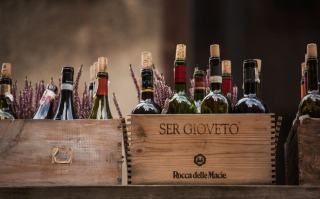
Crus Bourgeois are sold by French wine merchants, online shops and directly at many châteaux, a lot of which welcome visitors on the Médoc wine route. Most bottles sell between 12 and 40 euros, with Exceptionnel wines at the top of that range. Some Crus Bourgeois are also sold through the Bordeaux négoce, so the same wine may appear at several merchants with small price differences. Buying by the case of six or twelve, sometimes in the original wooden case, usually lowers the unit price.
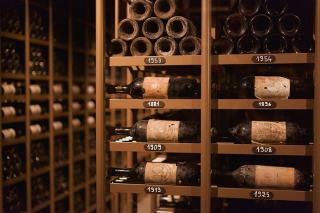
When a bottle arrives, check the label and the Cru Bourgeois sticker with its code: it shows the tier and the vintage. Our page on how to read a French wine label explains the other mentions you will find. Keep the bottles lying down, away from light, at a stable 12 to 14 °C.
FAQ
Is a Cru Bourgeois a classified growth?
No. A Cru Bourgeois belongs to the Classement des Crus Bourgeois du Médoc, revised every five years, while the classified growths come from the 1855 classification of 61 châteaux. The two lists are separate.
Which appellations can produce a Cru Bourgeois?
Eight Médoc appellations: Médoc, Haut-Médoc, Listrac-Médoc, Moulis-en-Médoc, Margaux, Saint-Julien, Pauillac and Saint-Estèphe. Only red wine is eligible.
Is a Cru Bourgeois Exceptionnel worth its price?
Often, yes: it is usually the grand vin of the château and costs less than most classified growths. It is a strong choice for a Bordeaux under fifty euros that you plan to open within ten years.