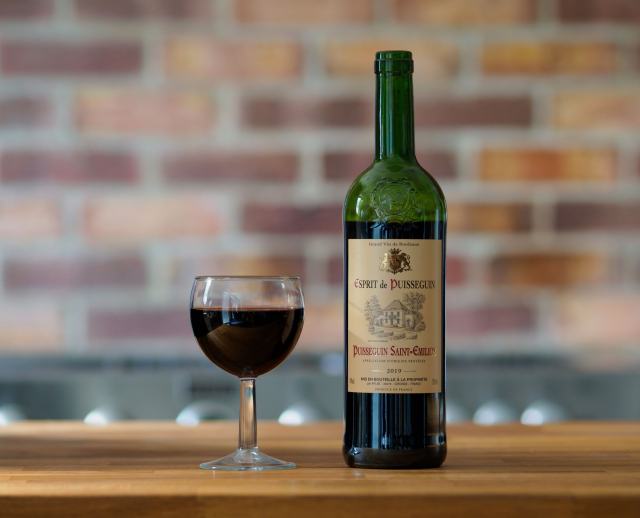
Sulfites in wine are sulfur dioxide and its salts, a compound that yeast makes naturally during fermentation and that most winemakers add to prevent oxidation and bacterial growth. For the vast majority of people they are harmless; true sulfite sensitivity is rare, and a red wine headache usually has another cause.
What are sulfites in wine?
The word covers a family of sulfur compounds: sulfur dioxide (SO2), and the salts that release it once dissolved, mainly potassium metabisulfite and sodium metabisulfite. On a European food label they appear as additives E220 to E228. In a bottle they exist in two forms: free sulphur dioxide, the active part that protects the wine, and bound sulphur, attached to sugars and other molecules, which does very little. The figure winemakers and regulators work with is total SO2, expressed in milligrams per litre.
No wine is completely free of them. Sulfites occur naturally during fermentation, because yeast produces a small amount as it turns grape juice into alcohol. That is why even a natural wine made with no additions at all still has to carry the words "contains sulphites" on its label in the EU and the United States: the mention becomes compulsory above 10 mg per litre, and yeast alone often gets past that line. If you want to understand the rest of what is printed on a French bottle, our guide to reading a wine label line by line goes through each mention.
On this page
Why winemakers add sulphur dioxide
Sulphur has been used in the cellar since at least the eighteenth century, when merchants burned sulphur wicks in barrels before filling them. It is still the most popular tool in winemaking for three reasons.
- It prevents oxidation. SO2 captures oxygen and blocks the enzymes that brown white wine and flatten its fruit. Without it, a bottle can taste of bruised apple within months.
- It stops microbial growth. Acetic bacteria (the ones that make vinegar) and spoilage yeasts such as Brettanomyces are held back, which gives the wine a stable shelf life.
- It controls the process. A dose at harvest calms wild yeast; a dose at the end halts fermentation in sweet wines, so they do not start fermenting again in the bottle.
The amount depends on the type of wine and on the production style. Every day in a busy cellar, the winemaker weighs how much protection the wine needs against how much the taste can bear, since too much sulphur smells of a struck match and dulls the aromas.
How much sulphite does each type of wine contain?
European rules set a ceiling for total sulphur dioxide that varies by colour and sweetness. Red wines get the lowest limit because their tannins already protect them from oxygen. White wine and rosé need more, and sweet wines the most, since residual sugar feeds microbes. Certified organic wine has lower caps, and many natural wine producers go lower still.
| Type of wine | EU limit, conventional | EU limit, organic |
|---|---|---|
| Dry red | 150 mg/L | 100 mg/L |
| Dry white and rosé | 200 mg/L | 150 mg/L |
| Sweet wines (some appellations) | up to 400 mg/L | lower, by 30 mg/L as a rule |
| Natural wine (Raw Wine fair charter) | no additions preferred, total capped at 70 mg/L | |
These are maximums, not typical levels. Well-made dry reds often sit far below their limit. If you already lean towards lower sulfite content, our selection of certified organic wines from France explains what each label guarantees in the cellar. The natural wine movement, championed by Isabelle Legeron, founder of the Raw Wine fairs, pushes the logic further: little or no added sulphur, wild yeast, nothing removed.
How labeling rules compare outside Europe
The labeling policy is broadly similar across major markets. In the United States, any beverage above 10 ppm must say so; Canada lists sulphites among its priority allergens and requires the mention on wines, beers and ciders sold there. What the rules do not require is the actual figure, so consumers cannot compare two bottles on the shelf. A winemaker who works with low doses will often publish the total on a technical sheet, on the estate blog or on request: a short email through the contact page usually gets an answer, since the data sits in every lab report. For a key customer, a good merchant can also provide it before a gift delivery.
Are sulfites bad for you?
For most people, no. Sulphur dioxide is one of the most studied food additives, and the European Food Safety Authority reviewed it in 2016 and again in 2022. The body breaks sulfites down with an enzyme called sulfite oxidase, and it deals with far larger quantities than wine delivers.
A real sulfite sensitivity does exist. The US Food and Drug Administration has estimated that around 1 % of people are sensitive, and that the share is higher among people with asthma. Adverse reactions include wheezing, tightness in the chest, hives or a flushed skin; in rare cases they are severe. That is the reason for the mandatory label mention, and the reason the FDA banned sulfites on fresh fruit and vegetables sold raw in 1986. Anyone with asthma who reacts to wine should talk to a doctor rather than rely on a lower-sulphite bottle: this page gives general information, not health advice.
For a healthy adult, the long term effects of normal consumption are not a concern for regulators. EFSA did flag in 2022 that high intake from all food sources combined could exceed the safe level for heavy consumers, which is a question about the whole diet rather than one glass. Symptoms such as pain behind the eyes the next day are rarely a sign of a sulphite problem; the other effects described below explain far more of that experience.
Which foods contain more sulphites than wine?
This is where the headache story falls apart. Dried fruit is the classic case: dried apricots can legally hold up to 2,000 mg per kilo in the EU, which is the reason they keep their bright orange colour. Other common sources are:
- dried fruit of every kind, from raisins to figs;
- bottled lemon juice, some fruit juices and cordials;
- pickles, some sausages and processed meats;
- frozen potato products and some prawns.
Someone who eats a handful of dried apricots with no reaction but blames sulfites for the effects of two glasses of red is probably blaming the wrong compound.
What really causes red wine headaches?
If sulfites were the culprit, white wine, which usually contains more of them, would hurt more than red. Most people report the opposite. Researchers have several better candidates.
- Alcohol itself
- Ethanol dilates blood vessels and dehydrates. A glass of water for every glass of wine does more for most drinkers than any change of bottle.
- Histamine and tyramine
- Both are produced during fermentation, notably the malolactic stage that almost all red wines go through. People with a low level of the enzyme that clears histamine can react to them.
- Quercetin
- A 2023 study from the University of California, Davis, published in Scientific Reports, suggested that quercetin, a flavonoid abundant in grape skins exposed to sun, may block the breakdown of alcohol and cause a build-up of acetaldehyde, which is linked to headache.
- Tannins
- These compounds from skins, seeds and oak are far more concentrated in red than in white. Their role is still debated.
Old or badly kept wine can add problems of its own, although they affect taste more than health; our page on corked wine, TCA and other faults explains how to tell them apart.
Can you remove sulfites from wine?
Products sold for this purpose, drops or filters, usually rely on hydrogen peroxide or resins that bind free sulphur dioxide. They can reduce the free part in the glass, but the evidence that they prevent a headache is thin, and they cannot remove the bound part. Decanting does not remove sulfites either, even if it does help a young wine open up.
The practical options are simpler:
- choose red over white or sweet wines if you want lower sulfite levels;
- look for organic wines, biodynamic bottles or a natural wine from a producer you trust;
- drink less, slowly, with food and water;
- note which wines give you trouble: if it is always young, cheap reds, the cause is more likely histamine or alcohol than sulphur.
One trade-off to keep in mind: a wine with little or no added sulphur is more fragile. It needs cool storage and it fades faster once open, so check how long an opened bottle stays drinkable before leaving it on the counter for a few days.
Low sulphur also changes how you buy and store wine. Freshness is easier to lose, so the winemaker relies on other methods to preserve quality: clean cellars, careful temperature control, higher acidity, and bottling under a tight closure. At home, take care to store these bottles in a cool, dark place and drink them within a reasonable range of time. Chemical preservative or not, a wine kept in poor conditions will lose its fruit; the key is to explore producers whose bottles hold up, and to search for the ones that suit you. Our notes on wine storage conditions apply twice over to low-intervention bottles. Skin contact wines (the orange style) are an interesting case: the tannins and phenolic compounds extracted from the skins play part of the protective role, which lets some producers use very little sulphur. When you order online, check that the delivery is not left in a hot van for a day, and ask about the shipping policy in summer; a reputable seller will create no issue about it. Your address and payment data are covered by the privacy terms of the shop, but the temperature of the parcel is the part that matters for the wine.
Sulfites in wine: common questions
Do all wines contain sulfites?
Yes. Yeast produces sulphur dioxide naturally, so every wine contains some, even with nothing added. "No added sulphites" is possible; "sulphite-free" is not.
Why does the label say "contains sulphites" on organic wine?
Because the labelling rule applies above 10 mg per litre whatever the production method. Organic wine is allowed less added sulphur, not none.
Is sulfite sensitivity the same as an allergy?
Not exactly. Most reactions are an intolerance rather than an allergic reaction involving antibodies, and they affect people with asthma more often. A doctor can confirm it with a controlled test.