Champagne wine is the sparkling wine grown and made in a cool chalk region of northern France, east of Paris, from three grape varieties: pinot noir, pinot meunier and chardonnay. Some 34,000 hectares of vines are planted across 320 villages between Reims, Épernay and the Côte des Bar, and the Comité Champagne counted 271.4 million bottles shipped in 2024.
Chalk soil, three grapes, bubbles made in the bottle
- Only wine grown on the chalk soil of the delimited champagne region, and made by the traditional method, may carry the name. French law fixed the boundaries and the planting rights in 1927.
- Three main grape varieties cover the whole champagne wine region: pinot noir, pinot meunier and chardonnay, with 17 grand cru and 42 premier cru villages ranked above the rest.
- The bubbles come from a secondary fermentation inside the sealed bottle, which traps carbon dioxide and builds around six bars of pressure.
- Champagne styles run from blanc de blancs to blanc de noirs, rosé and vintage; dosage sets the final sweetness, from brut nature to demi-sec.
- Explore the region itself to see why: the chalk cellars under Reims and the vines of the Montagne de Reims explain the wine faster than any tasting note.
What champagne wine is, and what the name protects
Champagne is a place before it is a drink. The appellation d'origine contrôlée covers roughly 34,000 planted hectares spread over some 320 villages in the Marne, the Aube, the Aisne, the Haute-Marne and the Seine-et-Marne. A sparkling wine made anywhere else, by any method, cannot legally carry the name in France or in the wider European Union, and the protection has been defended in courts across the world for a century.
The law of 22 July 1927 drew the modern boundaries after decades of dispute between growers, and it did something unusual for a wine region: it delimited not just the outer edge but the individual plots eligible to plant vines. That is why the region cannot simply expand when demand rises. A slow extension of the delimited area has been under study since 2003, and it has still not produced a single new planted hectare. Planting rights inside the champagne AOC are therefore finite, which shapes everything from grape prices to the value of a hectare of chalk.
Three rules separate champagne wine from every other sparkling wine in the country. The grapes must be grown inside the appellation. The second fermentation that creates the bubbles must happen inside the bottle that reaches the customer, not in a pressurised tank. And the wine must rest on its lees for a minimum period before release: fifteen months for a non-vintage blend, of which twelve on lees, and thirty-six months for a vintage. Nothing about those rules guarantees a great bottle, but they set a floor that most rival sparkling wines are not obliged to meet.
The word champagne on a label is also a commercial signature. Alongside it, in small type, sit two letters that say who actually made the wine. NM means négociant manipulant, a house that buys grapes. RM means récoltant manipulant, a grower who makes wine from their own vines. CM means a cooperative. Those two letters change more about a bottle than the size of the brand name above them.
The champagne wine region: chalk, climate and five growing areas
The region sits at roughly 49 degrees north, near the practical northern limit for ripening grapes in France. Its average annual temperature hovers around eleven degrees, and the climate is a hybrid: oceanic influence brings rain and moderates winter, continental influence brings sharp frosts in spring and heat spikes in summer. That marginal climate is the reason champagne is built on blending. In a cool year, no single village produces a complete wine on its own.
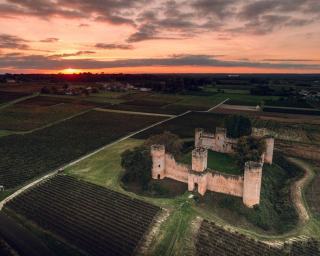
Under the vines lies the soil that defines champagne terroir: a deep bed of belemnite and micraster chalk, the compacted remains of a warm sea. Chalk holds water like a sponge and releases it slowly, which keeps vines fed through dry spells without waterlogging them in wet ones. It also drains fast, warms early and reflects light back into the canopy. No other soil in the champagne region behaves the same way, and where the chalk gives way to clay or marl the planting profile changes with it. The same chalk was quarried by the Romans and later carved into the crayères, the cellars beneath Reims where millions of bottles age at a constant ten degrees.
Five growing areas divide the region, and each one has a grape it does best.
Montagne de Reims
Not a mountain but a broad wooded plateau south of Reims, ringed by villages facing in every direction. Pinot noir dominates the north-facing slopes, where it keeps acidity and produces wines of structure and red-fruit weight. Ambonnay, Bouzy, Verzenay and Mailly are among the seventeen grand cru villages of the region, most of them clustered here and on the Côte des Blancs.
Côte des Blancs and the Épernay valley
A single south-east-facing escarpment running below Épernay, planted almost entirely to chardonnay on the purest chalk in the region. Cramant, Avize, Oger, Le Mesnil-sur-Oger and Chouilly give the taut, citrus, saline wines that make the finest blanc de blancs. The vineyards here are the reference point for anyone trying to understand what chalk contributes to a white wine.
Vallée de la Marne, Côte de Sézanne and the Côte des Bar
The Vallée de la Marne follows the river west of Épernay, on clay and marl rather than pure chalk, and it is the heartland of pinot meunier: earlier ripening, frost tolerant, generous in fruit. The Côte de Sézanne extends the chardonnay theme further south with a rounder profile. Furthest away, closer to Chablis than to Reims, the Côte des Bar in the Aube supplies roughly a quarter of the region's harvest, overwhelmingly pinot noir grown on Kimmeridgian marl. It was a forgotten corner of the appellation for decades and is now where many of the region's most interesting growers are working.
Grand cru, premier cru and the village ranking
Champagne ranks villages, not plots. The échelle des crus, a percentage scale once used to set the grape price paid to growers, left behind a three-tier ranking that still appears on labels across the champagne wine region. Seventeen villages hold grand cru status: Ambonnay, Aÿ, Avize, Beaumont-sur-Vesle, Bouzy, Chouilly, Cramant, Louvois, Mailly-Champagne, Le Mesnil-sur-Oger, Oger, Oiry, Puisieulx, Sillery, Tours-sur-Marne, Verzenay and Verzy. Another 42 villages are classified premier cru. Everything else, the large majority of the planting area, is simply champagne AOC.
The ranking is worth reading carefully, because it applies to the whole village boundary rather than to an individual vineyard. A mediocre parcel inside a grand cru village carries the title; an exceptional slope in an unranked village does not. Since the price scale was abandoned in the early 2000s, the words grand cru on a bottle describe geography and history rather than a guarantee of quality.
What the ranking does reliably indicate is soil and exposure. The grand cru villages sit on the best chalk and the best angles to the sun, which is why the planting there is overwhelmingly chardonnay on the Côte des Blancs and pinot noir on the Montagne de Reims. A blanc de blancs grand cru from Le Mesnil-sur-Oger and one from Cramant taste noticeably different, and learning to tell them apart is the most direct route into champagne terroir.
Two further label terms are often confused with the ranking. A single-vineyard champagne names one parcel, which the AOC permits but does not classify. A monocru or mono-village wine comes from one village of any rank. Both have multiplied as growers moved away from blending across the region, and both give a clearer picture of a specific piece of ground than a grand cru blend drawn from several villages at once.
Grape varieties: the three that matter and the four that survive
Seven grape varieties are permitted. Three cover around ninety-nine percent of the vineyard, and the split between them has barely moved in a generation: pinot noir on roughly thirty-eight percent of the plantings, pinot meunier on about thirty-two percent, chardonnay on about thirty percent.
Pinot noir is a black grape with white juice. It gives the wine its frame: red fruit, breadth on the palate and the capacity to age. It ripens late and suffers in poor flowering years, which is why it is planted where the sun reaches longest.
Pinot meunier, a mutation of pinot noir with downy white undersides to its leaves, buds later and ripens earlier. That timing is its whole purpose in a region where spring frost destroys crops: meunier is the insurance policy. It contributes rounded orchard fruit and makes a blend drinkable younger. Long treated as the junior partner, meunier now appears as a single-variety bottling from a growing number of producers.
Chardonnay is the only white grape of the three. It brings acidity, citrus, white flowers and the mineral edge that lets a wine age for decades. Blanc de blancs, made from chardonnay alone, is the clearest expression of it.
Four more varieties cling on across a few dozen hectares: arbane, petit meslier, pinot blanc and pinot gris, the last still called fromenteau locally. A handful of producers bottle all seven together as a curiosity and a record of what the region planted before phylloxera. If you want to see how the same grape varieties behave outside a cold chalk region, the wines of Burgundy make the comparison directly, since chardonnay and pinot noir are its two pillars as well. A wider look at the key grapes planted across France puts the Champagne trio in context.
How champagne is produced: the traditional method, step by step
Champagne production is a sequence of deliberate operations, and each one leaves a mark on the finished taste.
Harvest and pressing. Picking is by hand, a legal requirement, because whole bunches must reach the press intact. Black grapes with white juice only stay white if the skins are not broken. Yields at the press are capped: 25.5 hectolitres may be extracted from 4,000 kilograms of grapes, and the first 20.5 hectolitres, the cuvée, are the finest fraction. The rest, the taille, is coarser and often sold on or used in simpler wines.
First fermentation. The juice ferments into a dry, sharp, low-alcohol base wine, usually in stainless steel, sometimes in old oak. Most houses also run a malolactic fermentation to soften the acidity, though some, Lanson and Gosset among them, deliberately avoid it to keep the wine taut.
Blending. This is the decision that defines a house. In late winter the cellar master tastes dozens or hundreds of separate lots, village by village and grape by grape, and assembles the blend. For a non-vintage wine, reserve wines from earlier harvests are added so the bottle tastes the same year after year. Some houses hold reserves in perpetual solera systems running back decades.
Second fermentation. The blend is bottled with a liqueur de tirage, a small dose of sugar and yeast, and sealed. The yeast ferments that sugar, producing alcohol and carbon dioxide which cannot escape. Pressure builds to roughly six bars, about three times a car tyre. This secondary fermentation in bottle is the méthode champenoise, and it is what the traditional method means everywhere it is practised.
Lees ageing. The dead yeast cells settle and slowly break down. Prolonged contact with those lees is what creates the brioche, toast and pastry notes people associate with fine champagne, and it also builds the fine, persistent bead. Fifteen months is the legal minimum for a non-vintage; serious houses run to three years, and prestige cuvées often to eight or more. Contact time is the single variable that separates a simple bottle from a complex one.
Riddling and disgorgement. Bottles are gradually tilted and turned, by hand on wooden pupitres or by machine, until the sediment collects in the neck. The neck is frozen, the cap removed, and the plug of sediment fires out under its own pressure. The small volume lost is replaced by the liqueur d'expédition, and with it comes the dosage.
Champagne styles, from brut nature to prestige cuvée
Dosage is the last decision and the most visible one on a label. It sets sweetness, but it also changes how sharp or how broad the wine feels.
| Label term | Sugar added | How it drinks |
|---|---|---|
| Brut nature | None, under 3 g/l | Severe, mineral, unforgiving of a weak base wine |
| Extra brut | 0 to 6 g/l | Dry and linear, increasingly common |
| Brut | Under 12 g/l | The mainstream style, balanced |
| Extra dry | 12 to 17 g/l | Perceptibly rounder despite the name |
| Sec | 17 to 32 g/l | Gently sweet, good with mild cheese |
| Demi-sec | 32 to 50 g/l | Dessert territory |
| Doux | Over 50 g/l | Rare today, once the norm |
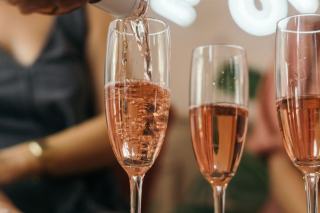
Alongside dosage, four style names describe what went into the blend. Blanc de blancs is chardonnay alone, often from Côte des Blancs villages, precise and long-lived. Blanc de noirs uses only pinot noir and pinot meunier, giving a fuller, wider wine with orchard and red-fruit weight. Rosé champagne is made either by adding a little still red wine to the base, which is legal here and almost nowhere else in France, or by brief skin contact, the saignée method, which gives a deeper colour and more grip. A rosé of assemblage tends to stay bright and floral; a rosé de saignée has the profile of a light red wine with bubbles, and it stands up to a main course where a paler rosé would disappear. Vintage champagne is declared only in years a house judges worthy, ages a minimum of three years and in practice far longer, and shows the character of one harvest rather than a house signature.
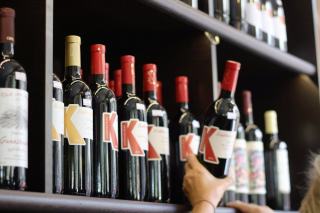
Above those sits the prestige cuvée: Dom Pérignon at Moët & Chandon, Cristal at Louis Roederer, Grande Cuvée at Krug, Belle Époque at Perrier-Jouët, Grand Siècle at Laurent-Perrier. They are selections of the best lots, given the longest ageing. A quieter equivalent exists on the grower side, the Special Club bottling, made by members of the Club Trésor de Champagne to a shared specification in a common bottle shape.
If the mechanics interest you more than the name, the same traditional method is used across France under a different label, and the comparison between crémant and champagne shows exactly which parts of the process the price gap actually buys.
Champagne houses, growers and cooperatives
Ownership in the region is inverted compared with most of the wine world. Around 16,000 growers farm the great majority of the vineyard area, yet the famous champagne houses sell the majority of the bottles, because they buy grapes rather than own all the vines they need. That structure has held for over a century and explains why the same village name can appear on a grand marque and on a bottle made by a family with four hectares.
The historic houses are concentrated in Reims and Épernay. Ruinart, founded in 1729, is the oldest still operating. Moët & Chandon is the largest by volume. Veuve Clicquot codified riddling in the early nineteenth century and gave the industry its first practical solution to sediment. Louis Roederer, Bollinger, Pol Roger, Taittinger, Laurent-Perrier and Perrier-Jouët each hold a recognisable house style, built and maintained through blending across dozens of villages. Many of the famous champagne houses run visits and tastings, and touring the chalk cellars beneath Reims is the fastest way to understand why the region built underground.
A champagne house visit follows a predictable shape and is worth planning around. The large houses in Reims and Épernay take bookings year round and pair a cellar walk with a seated tasting; the smaller growers of the Vallée de la Marne and the Côte des Bar prefer an appointment and will often show the vines as well as the cellar. Troyes and Reims both make a practical base if you stay a night, and the harvest, in late August or September, is the one period when almost nobody has time to receive visitors. Visit in spring or autumn instead, and discover that the iconic labels and the unknown ones are frequently neighbours on the same slope.
The grower movement, sometimes labelled grower champagne, moved in the opposite direction: single village, sometimes single plot, minimal dosage, transparent farming. Critics including Robert Parker's team and James Suckling have given top scores to growers who were unknown outside the region twenty years ago. Neither model is inherently better. A house blend buys consistency across vintages; a grower bottle buys the character of one piece of ground and the people who farm it.
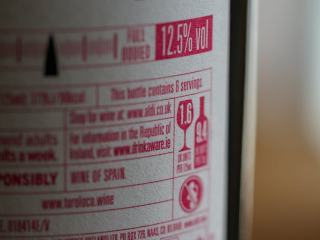
One practical note for buyers: the disgorgement date, printed on the back label by a growing number of producers, tells you how long the wine has rested since the lees were removed. A bottle disgorged six months ago will taste tighter than the same wine disgorged four years ago. It is more useful information than the vintage on most non-vintage bottles.
Champagne food pairing, beyond the aperitif
Treating champagne as an aperitif only wastes most of what it can do. High acidity, fine bubbles and a savoury lees character make it one of the most flexible wines at a table. The rule that works is to match the weight of the wine to the weight of the dish, exactly as you would with a still white wine.
- Blanc de blancs with oysters, raw shellfish, sushi, goat cheese and delicate white fish. The saline edge and citrus cut through brine without competing with it.
- Brut non-vintage with fried food of almost any kind. Acidity and carbon dioxide scour fat from the palate, which is why the pairing with salty fried potatoes or tempura works so well.
- Blanc de noirs and vintage with roast poultry, veal, mushroom dishes and hard aged cheeses. These have the structure to stand up to a main course.
- Rosé champagne with salmon, duck, charcuterie and summer berries. The red-fruit character bridges to the dish rather than contrasting with it.
- Demi-sec with fruit tarts and light desserts. A brut with a sweet dessert tastes thin and sour, which is the single most common pairing mistake made with this wine.
Two ideal partners are worth naming because they surprise people: parmesan, whose crystalline saltiness answers the acidity, and a plain roast chicken, whose skin and juices meet a mature blanc de noirs on equal terms. The broader principles are set out in our guide to foods and wines that work together, and why.
Serving and tasting champagne
Temperature first. Between eight and ten degrees suits a non-vintage brut; a vintage or a prestige cuvée shows more at ten to twelve, because cold mutes aroma and a complex wine has aroma to lose. Twenty minutes in ice and water chills a bottle faster and more evenly than two hours in a freezer compartment, which risks dulling the wine.
The glass matters more than most people expect, and the coupe is the worst of the options: it spills, it warms the wine and it lets aroma escape immediately. A tulip or a white wine glass with a slight taper holds the bubbles longer and concentrates the nose. Our page on the glasses that change what you actually taste covers the shapes and the washing habits that ruin them.
Opening is a matter of grip, not theatre. Hold the cork, turn the bottle, and let the pressure ease the cork out with a sigh. A flying cork leaves at speed and takes a measurable amount of the wine's carbon dioxide with it.
For champagne tasting itself, look at the bead before anything else: fine, slow, persistent bubbles indicate long lees contact and careful winemaking. Then smell. Young wines give citrus, white flowers and green apple; with age they move to brioche, toasted nuts, dried fruit and, in the oldest bottles, a note close to honey and coffee. On the palate, judge the finish. A short finish means dosage doing the work; a long one means the base wine was good.
What makes champagne unique among sparkling wines
Every element listed above exists elsewhere. Chalk soils exist in England, barely ninety miles across the Channel on the same geological formation. The traditional method is used in Franciacorta, Cava, Trentodoc, Tasmania and across the Loire. Chardonnay and pinot noir grow on five continents. Even the cool climate can be found, and rising temperatures are slowly bringing more places into range.
What cannot be copied is the combination, and more specifically the depth of the blending library. A large house holds hundreds of individual lots across dozens of villages and several vintages at once. That reserve is what allows a consistent wine to be built from a climate that produces wildly inconsistent harvests, and it took two centuries of capital and cellar space to assemble. Elegance, finesse and complexity are the words the region uses about itself, and they describe an outcome of that blending depth rather than any single vineyard.
The second element is scale of ageing. Roughly a billion and a half bottles rest in the cellars of the region at any moment, a stock worth years of shipments. No other sparkling wine production sits on a reserve of that size, and it is the reason a house can release a wine at eight years old as a matter of routine.
The third is that champagne heritage is legally fenced. The appellation, the delimited plots, the pressing yields and the minimum ageing are written into law rather than left to producers. That is why the wine has a floor, and why the country has spent a hundred years defending the word in trade negotiations.
Common questions about champagne wine
How long can you keep a bottle of champagne?
A non-vintage brut is released ready to drink and holds its form for three to four years in good storage, gaining a little weight in the process. A vintage or prestige cuvée will improve for ten to twenty years and sometimes far longer. Store bottles on their side, in the dark, at a steady temperature below fourteen degrees. Heat and light are what kill champagne, not time.
Does champagne always come from France?
Yes. The name is restricted to the delimited region in France, and that restriction is recognised in the European Union and in most of the countries France has trade agreements with. A handful of older United States brands were allowed to keep the word through a grandfather clause in a 2006 agreement, which is why the term still appears on some domestic American labels.
What is the difference between champagne and sparkling wine?
Champagne is one sparkling wine among many. What separates it is the appellation boundary, the compulsory second fermentation in bottle, the minimum lees ageing and the capped pressing yields. A sparkling wine made by the tank method carries its bubbles from a pressurised vat, costs far less to produce, and rarely develops the lees character that defines this wine.
Is grower champagne better than a big house?
They answer different questions. A grower bottle shows one village and one farming philosophy, and varies from vintage to vintage. A house blend is built to taste the same every year, which is an achievement of its own in this climate. Buy the grower when you want terroir, the house when you want a known quantity.
What does the dosage actually do?
It adds a small, measured amount of sugar after disgorgement. Beyond sweetness, dosage rounds the acidity and fills out the mid-palate, which is why a brut nature from a weak harvest can taste hollow while the same wine at eight grams tastes complete. It also affects ageing: lower dosage wines generally need more time on lees to compensate.
Why is champagne expensive compared with other sparkling wines?
The costs are structural rather than commercial. Land inside the delimited appellation is among the most expensive farmland in the world and cannot be extended. Hand harvesting is compulsory. Capped press yields mean less wine per hectare. And every bottle occupies cellar space for at least fifteen months, often years, before it can be sold. The gap narrows considerably when you compare a well-made grower bottle with a serious traditional-method wine from elsewhere.