
Alsace wines are French wines named by grape variety rather than by appellation. The exceptional climate of this wine growing region, sheltered by the Vosges, and the terroir of its hillsides give Riesling, Gewurztraminer, Pinot Gris and Muscat aromas of rare intensity, from bone dry white wine to sweet.
What sets the region apart
- Alsace is the one wine growing region of France that names the grape on the front of the wine, so the vins d'Alsace say what is inside before they say where they grew.
- Three appellations cover everything: Alsace AOC, Alsace Grand Cru AOC and Crémant d'Alsace AOC, with 51 exceptional grand cru terroirs between Bas Rhin and Haut Rhin.
- White wine dominates, Pinot Noir is the only red grape permitted, and the palette runs from delicate Sylvaner to sparkling Crémant and sweet dessert wine.
The grape varieties that define Alsace
Alsace grape varieties are read as a family of seven, four of them classed as noble and eligible for grand cru status. Because the label names the grape, a shopper who knows these seven names can navigate the entire region without memorising a single village. Our wider guide to French grape varieties and what each one tastes like places them next to the rest of the country; here they are in their home ground.
The four noble grapes
Riesling is the benchmark of Alsace, a dry white built on acidity rather than weight, with green apple, white blossom and the kerosene note that mature bottles develop. Alsace Riesling is drier and firmer than most German expressions of the same grape, and it ages for a decade or more without losing its spine. Gewurztraminer is the opposite in character: low in acidity, heady with lychee, rose petal and ginger, often carrying some residual sugar even when the label says nothing about it. Pinot Gris, once sold as Tokay d'Alsace, produces a broad, smoky white with dried fruit and a savoury edge that handles food most whites cannot. Muscat, whether Muscat Blanc à Petits Grains or Muscat Ottonel, is almost always vinified dry here and smells startlingly of the fresh grape itself.
The three everyday grapes
Sylvaner is the quiet workhorse of the region, lean, saline and best drunk young, and it is the only non noble variety allowed in a grand cru, at Zotzenberg. Pinot Blanc, often blended with Auxerrois, gives the soft, orchard fruit white that fills carafes in every winstub and forms the backbone of most sparkling wine made here. Pinot Noir is the single red grape of Alsace, planted on limestone and increasingly given oak and whole bunch treatment, producing a pale, red fruited style that has gained seriously in structure since growers began restricting yields.
Why the Vosges mountains shape every bottle
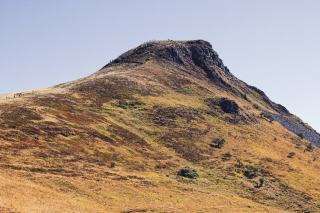
The Vosges mountains run the length of the region on its western side and block the rain coming off the Atlantic. Colmar, at the heart of the Haut Rhin vineyards, records some of the lowest rainfall of any French city, which is why growers here can ripen grapes slowly and late without the rot pressure that torments wetter regions. Long, dry autumns are what make both fully ripe dry white wine and botrytised dessert wine possible in the same vineyard, in the same year. The Conseil Interprofessionnel des Vins d'Alsace, the CIVA, counts this climate among the driest of any vineyard in France, and it explains why the wines keep a delicate aromatic definition that wetter regions struggle to hold.
Geology does the rest. The collapse of the Rhine rift valley left a narrow strip of hillside carrying granite, limestone, sandstone, marl, schist and volcanic sediment within a few hundred metres of each other. That mosaic is the reason Alsace wines from two neighbouring plots can taste so different while carrying the same grape name on the label. Granite pushes Riesling towards tension and citrus; limestone gives breadth; volcanic sediment, found at Rangen de Thann, gives a smoky, almost flinty character that drinkers recognise blind.
The vineyard splits administratively into Bas Rhin in the north, around Strasbourg, and Haut Rhin in the south, around Colmar. Haut Rhin holds the majority of the grand cru sites and the warmest, steepest slopes; Bas Rhin has been the source of much of the region's recent excitement, with lower prices attracting growers who wanted land they could actually afford to farm properly.
What types of wine does Alsace produce?
Alsace produces four families of wine, and a shelf that looks monolithically white is more varied than it appears. Dry white wine is the core of the region and covers Riesling, Sylvaner, Pinot Blanc, Muscat and a growing share of Pinot Gris. Sparkling wine is the second pillar: Crémant d'Alsace is made by the traditional method with a second fermentation in bottle, mostly from Pinot Blanc, Auxerrois and Pinot Noir, and it is one of the largest sparkling appellations in France outside Champagne. Compare it with the bottles in our guide to white wines and how grape shapes glass and the Alsace signature stands out immediately.
Red wine means Pinot Noir and nothing else, since it is the only red variety the appellation allows. Dessert wine arrives under two legally defined mentions, Vendange Tardive and Sélection de Grains Nobles, both restricted to the four noble grapes. A fifth category sits outside the rules: Edelzwicker and Gentil, blends that mix varieties in a single bottle and represent the historic way the region drank before varietal naming took over.
Across all four families, the vins d'Alsace share one thread: a palette of aromas that is intense without being heavy, and an elegant line of acidity that keeps even the sweetest wine from cloying. Alcohol sits higher than the French average because of the long ripening, which is worth noticing when a delicate dish is on the table.
Alsace grands crus, and what the classification actually promises
There are 51 Alsace Grand Cru AOC sites, each a named, delimited slope with its own rules on yield, ripeness and permitted grapes. Unlike Burgundy, where the classification grew out of centuries of monastic record keeping, the Alsace grand cru system is recent: the first sites were recognised in 1975 and the list was completed over the following three decades. That youth is why the names are less familiar to buyers than Chambertin or Montrachet, and why a grand cru here can still be a bargain relative to its quality.
The classification promises a site, not a house style. Schlossberg, Brand, Hengst, Rangen, Geisberg and Sommerberg each bend the same grape in a different direction, and a grower who farms three of them will bottle three wines that no blind taster would call siblings. The rules cap yields well below the regional appellation and require higher minimum ripeness, which pushes producers towards the late picking that gives Alsace wines their concentration. Residual sugar is the open question: a grand cru Riesling may be bone dry or noticeably sweet, and unless the back of the wine carries a sweetness scale, the only way to know is to ask.
Each grand cru terroir has its own signature, and the CIVA maps them slope by slope: Rangen de Thann is smoky and powerful, Schlossberg elegant and mineral, Hengst broad and exceptional in its depth. Comparing two of them from the same grower and the same vintage is the clearest lesson in terroir available anywhere in France.
Vendanges Tardives, noble rot and the sweet wines
Late harvest wine in Alsace is defined by law rather than by taste. Vendange Tardive requires grapes picked well after the normal harvest, at a minimum must weight set per variety, with no chaptalisation allowed. Sélection de Grains Nobles goes further and requires fruit affected by noble rot, picked berry by berry in successive passes through the vineyard, at ripeness levels that make each bottle the product of an entire row of vines.
Noble rot, the benign form of Botrytis cinerea, needs the same alternation of damp mornings and dry afternoons that Sauternes depends on, and the Vosges rain shadow supplies it more reliably than most. The results rival Sauternes for richness while keeping the aromatic lift of the grape underneath, and a Sélection de Grains Nobles Riesling can hold its acidity for thirty years. Both mentions are reserved for Riesling, Gewurztraminer, Pinot Gris and Muscat, so a sweet Sylvaner, however ripe, cannot use them. If dessert wine is the goal, our survey of Loire Valley sweet wines and their dry counterparts makes a useful point of comparison, since Vouvray works with a single grape where Alsace works with four.
How to read an Alsace label and choose a bottle
The label gives you the grape, the producer and, if there is one, the vineyard. What it rarely gives you directly is sweetness, which is the single most common source of disappointment for a first time buyer. Many producers now print a dryness scale on the back, and a rising number of estates state residual sugar in grams per litre. In the absence of either, three rules of thumb hold up well.
- Sylvaner, Muscat and Pinot Blanc are nearly always dry, whatever the vintage.
- Riesling is usually dry but not invariably, and warm years push it towards a fuller, rounder style.
- Gewurztraminer and Pinot Gris carry the most sugar, and a grand cru example of either is more likely to be off dry than not.
Producer matters more than any of this. A handful of estates have set the reference for decades, among them Domaine Weinbach, Marcel Deiss, Trimbach, Zind Humbrecht and Josmeyer, and each has a declared philosophy on sweetness that holds across their range. Marcel Deiss argues the opposite case to the regional norm and bottles field blends by site rather than by grape, which is worth tasting simply to hear the argument made in liquid form.
Driving the Alsace wine route
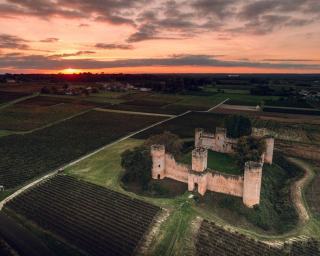
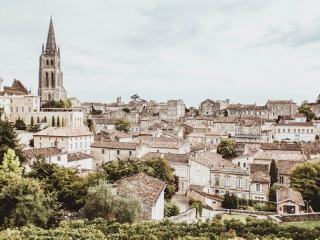
The Alsace wine route was created in 1953 and was the first signposted wine road in France. It runs for roughly 170 kilometres from Marlenheim in the north to Thann in the south, threading through the picturesque villages that give the region its postcard reputation: Riquewihr, Ribeauvillé, Eguisheim, Kaysersberg and Turckheim among them. The road stays on the lower slopes, so the vineyards are visible almost continuously, and most estates on it receive visitors without an appointment outside harvest.
Two practical points. Harvest, usually from early September into late October depending on the variety and the style being made, is the worst moment to arrive unannounced and the best moment to see the region working. And the villages sit close enough together that a single day covers perhaps six of them; the route rewards a slow itinerary far more than a complete one.
A visit is as much cultural as vinous. These villages carry the architecture, the language and the stories of a corner of France that changed hands with Germany four times in seventy years, and the Alsatian culture that grew out of that history is legible on every winstub sign. Strasbourg makes the natural base for the north of the route, Colmar for the south, and either city leaves you within half an hour of a cellar to visit. Tourist offices in both towns hand out a free map of the route, and most estates welcome a tasting without appointment outside harvest: the experience of discovering a grand cru where it grows is a different thing entirely from reading a tasting note.
Food pairing with Alsace wines
Food pairing is where Alsace wines earn their reputation among sommeliers, because the combination of aromatic intensity and firm acidity covers dishes that defeat most white wine. The regional cuisine makes the point on its own: choucroute garnie with a dry Riesling, Munster cheese with Gewurztraminer, tarte flambée with Pinot Blanc, baeckeoffe with Pinot Gris. Beyond the region, the same logic travels. Seafood is the natural partner for a Riesling of finesse: oysters, langoustines and delicate river fish all find their perfect counterweight in its acidity. Later in the dinner, Gewurztraminer partners powerful cheeses that flatten most red wine, and a Crémant makes an exceptional way to open a table where nobody agrees on anything.
| Wine | Works with | Why |
|---|---|---|
| Riesling | Seafood, river fish, charcuterie | Acidity cuts fat and salt without adding weight |
| Gewurztraminer | Spiced cuisine, washed rind cheese | Aromatic weight meets heat rather than fighting it |
| Pinot Gris | Game birds, foie gras, mushrooms | Smoke and dried fruit match savoury depth |
| Crémant d'Alsace brut | Apéritif, fried food, oysters | Traditional method texture with brisk finish |
| Pinot Noir | Roast poultry, charcuterie, soft cheese | Light red fruit stays on the right side of delicate |
Sweet wines are the harder case. A Vendange Tardive Pinot Gris works better with foie gras or a blue cheese than with a sugary dessert, and the classic regional error is to serve a botrytised wine alongside something sweeter than itself. Our broader practical guide to matching wine and food works through the principle on other regions.
Tasting Alsace wines: what to notice in the glass
A tasting of the vins d'Alsace rewards attention to three things. First the aromas, which arrive before the wine reaches the lip: the subtle citrus and white flower of Riesling, the exuberant lychee of Gewurztraminer, the smoky touch of Pinot Gris. Then the texture, where the region is unique, because the long, cool ripening builds a delicate weight rather than a heavy one, and alcohol that reads higher on paper than it feels on the palate. Last the finish, where terroir speaks: granite leaves a saline touch, limestone a rounder one, volcanic soil an almost flinty signature that is incomparable elsewhere in France.
Serve these whites cooler than instinct suggests, at cellar temperature rather than fridge temperature, or the finesse disappears. Open a grand cru an hour ahead and notice how the palette of aromas widens; young Riesling in particular can seem closed for twenty minutes and then unfold into something entirely different. A vertical tasting of one site across several vintages is the fastest way to discover what climate does to a single terroir, and many estates will create one for a visit booked in advance.
A short history of the Alsace wine region
Vines have grown here since Roman settlement, and the region's wines were shipped down the Rhine and traded across northern Europe through the Middle Ages, when Alsace commanded prices that put it among the most prestigious wine growing areas of the continent. The Thirty Years War, phylloxera and two changes of nationality between 1871 and 1945 dismantled that position, and the twentieth century began with the region producing volume rather than quality under German administration.
The recovery was deliberate. The Alsace AOC was granted in 1962, later than most French regions, precisely because the rebuilding had to come first. Varietal labelling, kept from the German period, turned out to be an advantage once export markets began buying by grape name. The grand cru classification followed from 1975, biodynamic farming took hold earlier and more widely here than almost anywhere in France, and the region now sits in the odd position of being historically famous, technically excellent and still underpriced relative to its peers.
Common questions about Alsace wines
Are Alsace wines sweet or dry?
Most Alsace wine is dry, and Sylvaner, Muscat, Pinot Blanc and the majority of Riesling are made without perceptible sweetness. Gewurztraminer and Pinot Gris frequently carry residual sugar, and wines labelled Vendange Tardive or Sélection de Grains Nobles are sweet by definition. Where the style is unclear, look for a dryness scale on the back label.
What is the difference between Alsace AOC and Alsace Grand Cru AOC?
Alsace AOC covers the whole region and permits all the authorised varieties at regional yields. Alsace Grand Cru AOC applies to 51 named slopes, caps yields more tightly, demands higher minimum ripeness and restricts the grapes to Riesling, Gewurztraminer, Pinot Gris and Muscat, with Sylvaner allowed at Zotzenberg alone.
How long do Alsace wines age?
Dry Riesling and grand cru wines commonly improve for ten to twenty years, and Sélection de Grains Nobles can hold far longer. Pinot Blanc, Sylvaner and Muscat are built for early drinking, within two or three years of the vintage. Crémant d'Alsace is best young unless the producer has aged it on lees for an extended period.
Is Pinot Noir from Alsace worth buying?
Alsace Pinot Noir has changed more than any other wine in the region over the past twenty years. Lower yields, better clones and serious barrel work have produced red wine with real structure from limestone sites, and the best examples now stand comparison with village level Burgundy while remaining far less known.