Decanting wines is the act of pouring a bottle into a wider vessel, either to leave sediment behind or to put the wine in contact with air before drinking. The two purposes ask for opposite handling: a young tannic red gains from long aeration, while an old bottle of wine is fragile and wants a quick, careful pour and a glass soon after.
What the decanting process actually settles
- Sediment separation concerns aged red wines; aeration concerns young, full bodied red wines. Very few bottles need both.
- Time in a decanter is the real variable: minutes for a delicate old wine, one to three hours for a closed young one.
- Most white wine, rosé and every sparkling wine is served straight from the original bottle.
- Serving temperature does more for the drinking experience than any decanter ever will.
What decanting a wine does, and what it does not
A decanter does two mechanical things and nothing else. It holds the sediment back in the bottle, and it spreads the wine across a wide surface so that oxygen reaches it. Everything else attributed to decanting wines follows from those two facts.
Aeration works because oxygen reacts with the volatile compounds released as soon as a bottle is opened. Reductive notes, the struck-match or burnt match smell that some reds and a few whites carry when freshly poured, dissipate within minutes of contact with air. At the same time the harder tannins of a young wine begin to soften, and the aromatic profile that was folded shut starts to unfold. This is what wine lovers mean when they talk about letting a wine breathe: not the tiny surface of liquid in the neck of the bottle, which does almost nothing, but the full volume laid out in a wide vessel.
The practical effect is a change in the aroma. As the wine is aerated, the lightest compounds release first, and the aroma that follows is broader and more complex; slow evaporation at the surface also lets fruit and floral notes through. Wait too long, though, and the same oxygen that helped begins oxidation: the aroma flattens, the flavor turns dull, and a wine left aerated all afternoon is past its best. Aerating is therefore a matter of degree, enough contact to reveal complexity and no more.
Sediment is a different matter. It is made of colour pigments and tannins that have bonded and fallen out of solution over the years, plus a little tartrate. It is harmless, but it is gritty on the palate and it clouds the glass. No amount of time in a decanter removes it; only a careful pour does.
What decanting does not do is repair a faulty bottle. A corked wine stays corked, and a tired wine past its window stays tired. If a bottle smells of wet cardboard, air will not save it, and the fault is worth recognising for what it is. Our guide to spotting a corked bottle and other common wine faults covers what to look for before you reach for a decanter at all.
When to decant: young wines against old vintages
The single most useful question is not whether to decant a wine, but how old it is and how it was built.
Young, full bodied red wines
Young tannic reds benefit most, and they benefit clearly. A Bordeaux blend of cabernet sauvignon, merlot and malbec opened two or three years after harvest is usually tight and dominated by firm tannins. So is a northern Rhône syrah, a Madiran, a young Barolo. Pour the wine into a wide-bowled decanter and leave it one to two hours: the tannins round out, the fruit comes forward, and the aromas and flavors that were hiding behind the structure become legible. For a very young, very closed bottle, three hours is not excessive. Notice what happens to the aroma over the first half hour, because that is where a young vintage shows what it has. With a structured wine from a warm vintage the improvement is large; with a lighter one it is modest, and the practical answer is to taste rather than to guess. These are the wines where the difference between a decanted glass and an undecanted one is obvious to anyone at the table.
Aged bottles and delicate styles
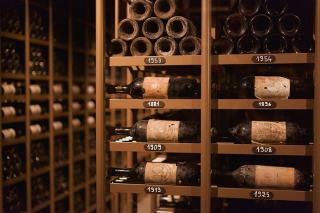
Old wines need the opposite treatment. A twenty-year-old Burgundy built on pinot noir, or a mature Bordeaux, has aromatic compounds that are delicate and can fade within half an hour of exposure. At that age the aroma is the first thing to go, since evaporation and oxidation work quickly once an old wine has been aerated. Decant it gently, purely to separate the wine from its sediment, and serve within thirty to forty-five minutes. Stand the bottle upright in the wine cellar or on a shelf for twenty-four hours beforehand if you can, so the sediment settles at the base rather than clinging along the side where wine racks have kept it lying flat. If the wine seems to fade in the glass over the meal, that is normal: with old bottles the peak is early, and the best drinking experience is often in the first twenty minutes.
Between those two poles, light bodied reds such as Beaujolais, Loire cabernet franc or a simple pinot noir rarely need more than a few minutes of air. Pouring them into a decanter does no harm, but the gain is small.
How long to decant, depending on the wine
Decanting time is where most advice goes wrong, because a single number cannot cover every type of wine. The table below gives working ranges rather than rules, and they are worth adjusting to your own taste after the first glass.
| Wine style | Time in the decanter | Why |
|---|---|---|
| Young, tannic red (Bordeaux, Rhône, Barolo) | 1 to 3 hours before serving | Aeration softens tannins and opens the aromatic profile |
| Mid-weight red, three to eight years old | 30 to 60 minutes | Enough contact to lift the fruit without flattening it |
| Aged red with visible sediment | 15 to 45 minutes, no more | Sediment removal only; the aromatics are already fragile |
| Rich white wine (white Burgundy, oaked sauvignon blanc) | 15 to 30 minutes | Clears reduction and widens the texture |
| Crisp white wines, rosé, sparkling wine | None | Freshness and bubbles are lost, not gained |
One habit is worth more than any chart: pour a small glass as soon as the wine goes into the decanter, and taste it again every twenty minutes. Your own tasting notes across three or four checks will tell you when the wine has arrived and when it has begun to tire. Doing this once with a wine you know well teaches more than any guide to decanting can.
The decanting process, step by step
The technique only matters when sediment is involved. For a young wine, pouring everything in briskly is the point, since splashing increases aeration.
- Stand the bottle upright for a day so the sediment collects at the base.
- Open it without shaking it. Cut the capsule cleanly and wipe the neck of the bottle.
- Set a candle, a phone torch or a lamp behind the shoulder of the bottle so you can see through the glass.
- Pour the wine into the decanter slowly and steadily, in one continuous movement, without stopping and restarting.
- Watch the shoulder. When the first dark thread of sediment reaches it, stop. Two or three centilitres left behind are the price of a clean glass.
Restarting the bottle pour after a pause is the most common mistake: the sediment lifts off the base and travels with the wine. A steady hand for thirty seconds is the whole skill.
Double decanting, and when it is useful
Double decanting means pouring the wine into a decanter, rinsing the original bottle, then pouring the wine back into it. It sounds fussy, and for most evenings it is. It has two real uses: serving a wine blind, since the bottle can be wrapped and the label hidden, and giving a young wine a vigorous burst of aeration without leaving it exposed in a wide vessel for hours. For a very young, very structured red, decanting a wine twice in quick succession does in ten minutes what an hour of still contact would do.
Choosing a decanter, and looking after it
A decanter needs a wide base and a narrow neck, and nothing more. The wide base is the working surface where wine meets air; the narrow neck makes the pour manageable. Capacity should suit a standard bottle of wine with room to spare, so that the liquid sits shallow rather than deep.
Elaborate shapes, duck necks and spirals are decoration. They look striking on a table and they make glass cleaning genuinely difficult, which is the real cost. A plain carafe performs the same job and dries properly.
Cleaning matters more than shape, because a decanter that smells of old wine or of detergent will mark everything poured into it. Rinse with hot water immediately after use, never with soap, and leave it upside down on a rack to drain. For stubborn tannin staining, warm water with a little white vinegar and a handful of stainless steel cleaning beads works without scratching. Store it dry and uncovered; a stopper left in traps stale air. None of this is refinement for its own sake: a clean vessel improves what you smell in the first seconds, which is exactly where the aroma of a freshly poured wine is at its most complex. The same care applies to the wine glasses themselves, and the shape you choose there affects the drinking experience as much as the decanter does, as our piece on how glass shape changes what you taste sets out.
Which wines to leave alone
Sparkling wines are the clear case: Champagne, crémant and every other sparkling wine lose their mousse within minutes in a decanter, and the loss is not recoverable. The only exception is an old vintage Champagne, twenty years or more, where the pressure has dropped and a few minutes of air can help. Even then, most producers advise against it.
Crisp white wine and rosé gain little. Their appeal is freshness and precision, and both are diminished by contact with air and by the warming that inevitably happens in a wide vessel. A rich, young white Burgundy or a barrel-aged sauvignon blanc is the exception worth trying, with twenty minutes at most.
Wines already open for a day are a separate question. Air that helped on the first evening becomes oxidation on the second, and the window varies a great deal by style; we set out the realistic limits in our note on how long an opened bottle actually lasts.
Finally, temperature undoes decanting faster than anything else. A red served too warm tastes flabby and alcoholic whatever you did with it beforehand, and a white served ice-cold shows nothing at all. Getting the serving temperature right for each style is the cheapest improvement available to any wine drinker, and it costs only a little planning.
Questions wine drinkers actually ask
Does decanting work for every type of wine?
No. It helps young tannic reds most, aged reds for sediment only, and rich whites a little. Crisp whites, rosé and sparkling wine are better poured straight from the bottle.
Can you decant a bottle too early?
Yes. Beyond three or four hours most reds begin to lose their aromatic lift, and a delicate old wine can fade in under an hour. If you decant well ahead of a meal, taste as you go.
Is a wine aerator the same thing?
A pour-through aerator gives an instant burst of air and suits a young, simple red poured by the glass. It does not separate sediment, and it cannot replace the slower, gentler effect of an hour in a decanter.
What if I have no decanter at all?
A clean glass jug, a water carafe or even a wide-mouthed pitcher works. The vessel needs surface area, not provenance. For a single glass, swirling in a large bowl achieves a surprising amount in two minutes.
Across grape varieties, wine regions and vineyards character, the same principle holds: decanting wines is a tool for a specific problem, not a ritual. Used where it belongs, it turns a closed bottle into a generous one and keeps the grit out of the last glass. Beyond that, how long you wait and how much air you allow become a personal calibration, built from your own tasting notes rather than from a chart. Explore our selection region by region, or subscribe to a club if you would rather be sent a shortlist than build one; either way, the improvement you notice in the glass will come more from temperature and timing than from the shape of the vessel.