
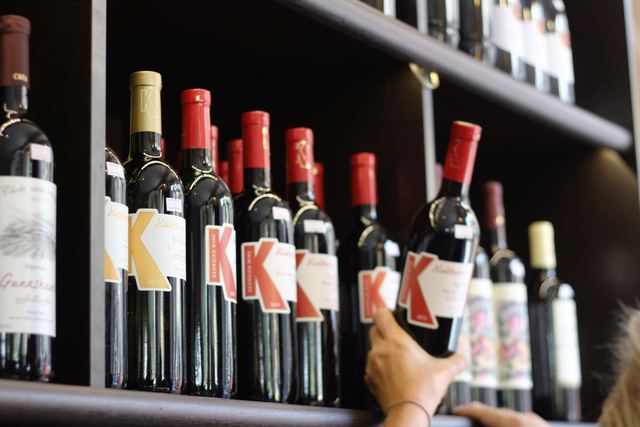
A wine club is a wine subscription that delivers a curated selection of wines to your doorstep each month, picked by a sommelier rather than by you. Offers run from an affordable discovery case of three bottles to a premium membership with access to small French wineries you will not find in a wine shop.
Three things to settle before you choose a wine club
- Who selects the wine: a house sommelier, a quiz built on your preferences, or the winemakers themselves.
- How the wine travels: temperature controlled shipping matters more than the box you receive it in.
- What you can change: skip a case, pause or cancel, swap a red wine for a white wine, or keep the value as credit.
- What comes with the bottles: tasting notes, food pairing suggestions and the chance to discover a wine region you did not know.
What a wine club is, and what it promises
A wine club is a standing order for wine. You sign up once, you answer a few questions about the wine you already enjoyed, and a selection of wines arrives on a fixed cycle until you stop it. The promise is not cheaper wine. The promise is that a wine professional whose job is to taste has already done the sorting, so that every wine you open has passed through a filter you trust, an Italian red one time and a natural white the next.
That filter is the whole product. A wine shop sells you what you walk in and ask for; a club sells you what you would never have asked for. The good ones use the cycle to widen your map, moving from the names everyone knows in Bordeaux or Burgundy to a wine region you could not place, then back again before you feel lost. A club that only ships safe bottles is a delivery service with extra steps.
The subscription model spread with online wine sales, and it now covers a wide range of buying options. At one end sits a small discovery box of two bottles. At the other sits a premium wine membership that reserves allocations of fine bottles you cannot buy retail. Between them lie the clubs most people actually join: a mixed case on a monthly or quarterly rhythm, with tasting notes, food pairing suggestions and a note on the producer. If sparkling wine is what you are after, a dedicated guide to French sparkling wine and how it is made will serve you better than a general club.
How a wine subscription service works, step by step
The mechanics are close to identical from one club to the next, which makes the differences easy to spot once you know where to look.
Signing up and building a taste profile
You give an email address, a delivery address and a payment method, and you answer a short questionnaire: red or white, light or full, sweet or dry, adventurous or steady. Some clubs ask you to rate a handful of bottles you have already enjoyed. The questionnaire feeds a personal profile, and every rating you give afterwards refines it. Read the privacy policy before you sign up, because a club that profiles your taste is collecting real data about what you drink and when. A serious operator states plainly what it keeps and how to get it deleted.
Most clubs ask for a minimum commitment at the start, often the first two or three shipments. That is the point where they recover the cost of acquiring you, and it is the clause worth checking first: a club that needs to lock you in for a year is telling you something about its confidence in the selection.
The shipment cycle
Once you are a member, a shipment leaves on a set date. Most clubs publish that date in advance and send a reminder by email a few days before, with the chance to skip, swap a bottle or change the address. The wine is picked, packed in a moulded insert, and handed to a carrier. You receive a tracking link, and delivery usually needs an adult signature because of the alcohol.
The useful detail is what happens when you are not home. A club that reships without argument is worth more than one that offers a marginally better selection of wines, because a shipment that sits in a depot in July is a shipment of cooked wine. The best operators simply hold the shipment until the weather allows.
Pausing, skipping and cancelling
Look for three separate rights, because clubs often grant one and not the others: the right to skip a single shipment, the right to pause the membership for a stretch, and the right to cancel outright. A club that lets you pause or cancel from your account page, without a phone call to customer service, is confident in what it ships. The ones that bury the cancellation behind a contact form are telling you the reverse. Some convert a skipped shipment into store credit instead of simply not charging you, which suits a member who buys extra bottles anyway and irritates everyone else.
What is actually in the box
A typical shipment holds between three and twelve bottles, packed upright or on their side depending on the insert. The bottles are the product, but they are not the whole of it.
Tasting notes come with almost every wine club, printed on a card or sent as a link. The useful ones describe what you will smell and taste rather than awarding a number, and they name the grape, the vintage and the producer. Pairing suggestions follow, and here the gap between clubs is wide: a generic line about red meat helps nobody, while a note that tells you the bottle needs a dish with acidity in it tells you how to serve it tonight.
Many clubs add a short piece on the winery: who farms the vines, how long the family has held them, whether the fruit is bought in or estate grown. This is the part that turns a delivery into an education, and it is also the part that is easiest to fake. A club that names its growers and lets you look them up is doing something different from one that ships anonymous bottles under a house label.
The composition of a wine case varies with the club. A mixed case usually runs two thirds red wine and one third white, with a sparkling bottle at the end of the year. A themed case might be all Italian wine, all California wine, or all from a single French wine region. Clubs built around low-intervention bottles ship what the trade calls natural wines, a category with real variation in quality, and our overview of certified organic and natural French bottles sets out what the labels do and do not guarantee.
The main types of wine club
Clubs differ at the root, not at the margin, and the difference is who takes the risk on the wine. Some buy finished bottles and resell them. Others, Naked Wines being the best known of them, fund independent winemakers up front and sell the result to members, which is why their range carries labels you will not find in a shop. A third group is run by a single estate and ships only its own production.
| Type of club | Who picks the wine | Typical shipment | Budget level | Suits |
|---|---|---|---|---|
| Discovery club | House buyer or sommelier | Three to six mixed bottles | Entry | Beginners widening their map |
| Regional club | Specialist in one area | Six to twelve bottles, one theme | Entry to middle | Drinkers going deep rather than wide |
| Producer funded club | Winemakers backed by members | Six to twelve bottles, exclusive labels | Middle | People who want access to small wineries |
| Estate or winery club | The producer itself | Allocations, new releases, library bottles | Middle to high | Anyone already loyal to one estate |
| Premium or cellar club | Buyer with allocation rights | Few bottles, high provenance | High | Collectors buying to keep |
| Gift subscription | House buyer, recipient profile optional | Fixed run of three, six or twelve shipments | Any | A present that keeps arriving |
Two more shapes are worth knowing. The wine of the month format ships a single bottle with a long note attached, which suits someone who drinks slowly and wants to learn rather than stock up. And the flash club, which sells short offers by email rather than on a cycle, is not a subscription at all: you keep the membership and buy only when an offer tempts you.
What shapes the price of a wine subscription
The cost of a wine subscription is not a single number, and comparing headline figures between clubs tells you almost nothing. Four things move it.
The first is the bottle itself: the band the club buys in, which is the only lever that changes what is in your glass. The second is the size of the shipment, since a twelve bottle case carries its packing and its transport more efficiently than a three bottle box. The third is shipping, which some clubs fold into the price and others add at checkout, and which varies sharply with where you live. The fourth is the commitment: a club that has your card on file for a year prices differently from one you can cancel tomorrow.
Read the offer with those four in mind and the real picture appears. A club that looks expensive because it ships small quantities of good bottles with shipping included may cost less per bottle than an affordable wine club whose transport is billed separately and whose case is padded with fillers. Introductory offers deserve the same suspicion: the first shipment is often sold near cost to get you through the door, and the standing rate afterwards is the one that matters.
One warning sign is worth naming. A club that will not show you the full list of what it shipped last cycle, with producers and vintages, is asking you to buy a mystery at a fixed price. The good operators publish that list because it is their best argument.
Shipping, shipments and the summer problem
Wine travels badly when it is hot. A bottle left in a metal van in August can reach temperatures that flatten the fruit and push the cork, and nothing on the label will tell you it happened. Temperature controlled shipping is the single feature that separates a serious club from a reseller with a warehouse, and it is also the reason some clubs pause shipments in the hottest weeks rather than gamble on a carrier.
Delivery rules add a second layer. Alcohol needs an adult to sign, which means a shipment to an empty flat comes back to the depot, and a shipment that bounces twice can be returned. Members who live in a city often route their bottles to a work address for that reason; rural members tend to nominate a neighbour. Some markets add their own restrictions: in the United States, shipments reach Washington DC and most states but not all of them, Alabama and Utah among the exceptions, because alcohol shipping is regulated state by state.
Crossing a border makes the question sharper still. Duties, excise and customs paperwork apply to wine in a way they do not apply to most parcels, and the club that handles it for you is selling you more than the bottles. Our guide to customs, duties and summer heat when shipping wine from France covers what to expect on an international order.
What a wine club changes over time
A wine club works on your palate slowly. The first cases are a survey: a wine from one region, a wine from another, an Italian wine next to a French one, a natural white beside a classic red. For a while nothing much seems to happen. Then somewhere around the fourth or fifth case you notice you have a favorite grape you had never heard of, and that you can recommend a wine to a friend without repeating a label you saw in an advert. That shift is the real return on a wine subscription, and it takes time.
The mechanism is repetition with variation. Each wine arrives with tasting notes, you drink it, you rate it, and the next selection moves a little toward what you enjoyed. Over a dozen cycles the club has learned your preferences better than you could describe them yourself, which is why a member who stays a year gets far more out of the experience than one who leaves after a season. The house somm is not guessing by then; a good sommelier is reading twelve data points you handed over one bottle at a time.
There is a second effect, harder to measure. A club gives you access to wine you would never have started with. Small family estates with a couple of hectares of vineyards do not have the volume to supply a supermarket, and many sell their entire production through clubs, restaurant lists and direct online orders. A member gets access to those wines; a shopper in a local store does not, whatever the quality of the shop. That is also why so many certified organic and low-intervention wines reach drinkers through subscriptions first and shelves later. These subscriptions also mirror broader wine trends, with worldwide volumes falling while demand shifts toward fresher styles.
The habit changes how you buy the rest of your wine too. Once you have received a wine from a region you did not know, you start looking for that region when you purchase elsewhere, and a wine list in a restaurant stops being intimidating. Winter cases tend to push you toward fuller red wine, summer ones toward white wine and rosé, and after a year of that rhythm you carry a working map of French wine in your head rather than a list of names. Members often describe the moment the wine delivered to their doorstep stopped being a surprise and became a conversation with the person who chose it.
How to choose a wine club
Start from how you drink, not from the marketing. Someone who opens a bottle twice a week and someone who opens one a fortnight need different cycles, and the second will end up with a stack of unopened cases if they pick the first person's club.
The questions that separate the good clubs
- Can I see the last three shipments in full, with producers and vintages?
- Can I skip a shipment, and how many days before it leaves?
- Is shipping included, and what happens to a bottle that arrives damaged?
- Does the club ship in high summer, and does it use insulated packaging?
- Can I set the balance of red and white, or is the case fixed?
- How do I cancel, and does anything remain owed after I do?
Answers to those six tell you more than any ranking of top wine clubs, because they describe the club you will live with rather than the one in the brochure. A club that answers all six clearly on its own site has thought about the member; one that answers none expects you not to ask.
The second filter is the range. If you want to explore widely, a mixed club that rotates across the French wine regions and occasionally reaches for Italian wine or a bottle from California will keep the cycle exciting. If you already know what you like, a specialist club, all Pinot Noir, all Cabernet Sauvignon, all Sauvignon Blanc, all from one appellation, adds depth instead. Trying to get both from one subscription usually produces neither.
The third filter is time. A club is a habit, and habits fail on logistics. Pick a rhythm you can actually absorb, and remember that a quarterly case of twelve is the same volume as a monthly case of four with three quarters of the delivery hassle.
Pros and cons of a wine club
The honest case for a subscription is that it removes a decision you were making badly. Most drinkers buy the same handful of labels for years because choosing between four hundred bottles in a shop is exhausting. A club replaces that with a curated set of hand selected wines and a note explaining each one, and the variety alone widens what you enjoy.
The case against is equally real. You pay for someone else's judgement, and it will not always match yours; a bottle you would never have picked is sometimes a discovery and sometimes a waste. Cases accumulate faster than they empty. And the price per bottle rarely beats what an attentive buyer finds on their own, because you are paying for the curation, the packaging and the transport as well as the wine.
Weighing those pros and cons comes down to what you want from the habit. If the goal is to drink better without thinking about it, a club earns its keep. If the goal is the lowest price per bottle, it does not, and a relationship with a good independent merchant will serve you better. If the goal is to learn, a club with strong tasting notes is the cheapest structured course in wine you will find, and it is more fun than a class.
Giving a wine club as a gift
A subscription is one of the few presents that arrives more than once, which is why gift options for wine lovers so often come back to this format. A fixed run of three, six or twelve shipments avoids the awkwardness of a standing charge on someone else's card, and most clubs will let you schedule the first delivery for a date that matters.
Three details make the difference between a good wine subscription gift and an irritating one. Let the recipient set their own profile, since a case chosen from your taste is a case chosen wrong. Check that the shipping address can be changed without unravelling the whole order. And pick a cycle that does not overwhelm: a quarterly gift is a pleasure, while a weekly one becomes an obligation.
If a subscription feels like too much commitment for the occasion, a single well chosen case does the same work with none of the admin, and our selection of wines to give, from champagne to fine reds is built for exactly that. Wine glasses, a decanter or a tasting set round out the present for anyone who already has plenty of bottles.
Common questions about wine clubs
How many bottles arrive in a typical shipment?
Three to twelve, with six the most popular size. Discovery boxes sit at the low end, regional and producer funded clubs in the middle, and premium clubs often ship fewer bottles of higher provenance.
Can I choose the wines myself?
Rarely in full, and that is the point of the format. Most clubs let you set a red and white balance, exclude a style you dislike, and swap one bottle per shipment; a club that lets you build the whole case is a shop with a delivery schedule attached.
What happens if a bottle arrives broken or corked?
A reputable club replaces it. Breakage is settled on a photograph, and a corked bottle is usually credited on your word, since a member who lies about TCA is a rounding error next to one who leaves over a refused claim. Get that policy in writing before you join.
Is a wine club cheaper than buying the same bottles in a shop?
Usually not on a straight comparison, and clubs that claim otherwise are comparing against inflated reference prices. What you buy is the selection, the notes and the access to labels that never reach retail shelves, including bottles from small wineries with no distribution.
Can I pause a wine club over the summer?
Most clubs allow it, and several pause shipments themselves during heatwaves to protect the wine. Check whether a skipped cycle simply goes unbilled or converts into credit you have to spend later.
Do wine clubs ship internationally?
Some do, most do not, and the difference is regulatory rather than practical. Cross border shipments involve excise, customs declarations and age verification on arrival, so clubs that ship abroad tend to charge for it separately and restrict the list of destinations.